

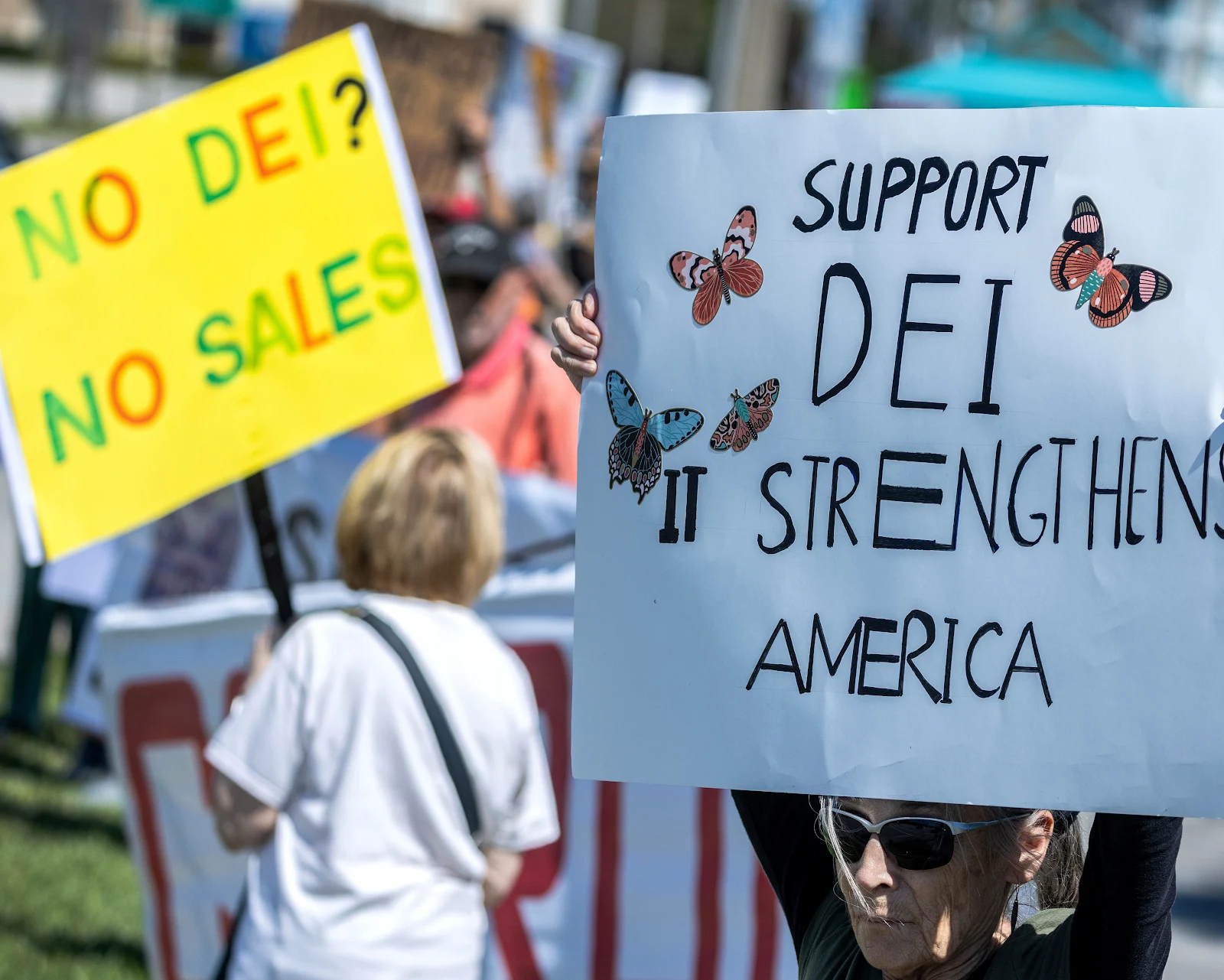
The Trump administration's "war on woke" has claimed a significant victim in the realm of diversity, equity, and inclusion (DEI). Once a favorite term among Fortune 500 CEOs and the political elite, DEI has been blamed for various issues, from the collapse of the Francis Scott Key Bridge in Baltimore to the deadly Los Angeles wildfires. As reported by The Guardian, the US supreme court's overturning of affirmative action in higher education in 2023 has also contributed to DEI becoming a legal liability.
Kenji Yoshino and David Glasgow, two law professors at New York University, are stepping in to offer a new vision for an inclusive America. In their book, How Equality Wins: A New Vision for an Inclusive America, they argue that the project of equality is far from over, but it's in desperate need of a survival plan. Yoshino and Glasgow spoke to The Guardian about their book and the hope that the essence of DEI can live on past the political moment that killed it.
Understanding the True Meaning of DEI
According to Yoshino, "DEI itself, as an acronym, is dead. But the underlying value of equality isn't. Not by a long shot." The authors outline several strategies for equality's survival, including understanding what advocates are actually fighting for and what they're fighting against. Opponents of DEI claim that it leads to incompetence, but Yoshino and Glasgow posit that this reasoning ignores the biases present in the hiring process.
A notable example is the increase in women's representation in symphony orchestras. Before the use of screens to hide a musician's identity during auditions, only 5% of orchestra members were women. By 2016, that number jumped to 35%. This increase didn't come from explicit preferences, but from the removal of bias from the process. Yoshino and Glasgow refer to this as "lifting versus levelling."
Strategies for Equality's Survival
Yoshino and Glasgow encourage tough conversations about where DEI got things wrong, from fostering a culture of shame around disagreement to distracting debates on terminology. They also propose strategies such as "embrace universality," which points out that programs focused on equality can still exist despite the legal environment. Another strategy, "shift from cohort to content," involves focusing on content restrictions rather than limiting programs to specific cohorts.
Yoshino and Glasgow have successfully implemented this strategy in their course for law students, which emphasizes skills not typically found in textbooks. By opening the course to "all students with an interest in diversity and inclusion," they have created a universality strategy that has proven to be an "amulet against legal liability."
Loopholes and Opportunities
The supreme court's affirmative action decision left a loophole for universities, allowing them to consider "an applicant's discussion of how race affected his or her life" in student essays. Yoshino and Glasgow suggest that organizations can get creative with this exemption, openly asking candidates about how race has affected their life during interviews.
These strategies and loopholes are more important than ever, as DEI's death is not just coming from cultural wars, but also from litigation attacking private sector and state and local diversity programs. The US Equal Employment Opportunity Commission's investigation into Nike over discrimination against white employers and Trump's justice department's lawsuit against Minnesota's affirmative action program are just a few examples.
A Hopeful Future for Equality
Despite the challenges, Yoshino and Glasgow remain hopeful that DEI can still live on, maybe not by name, but by purpose. They emphasize that DEI has its origins in the civil rights movement and is part of efforts to ensure that the promise of civil rights is made real in people's everyday lives. Beyond the social case for equality, there's also a resounding business case for inclusion in the workplace as the US gets more diverse.
Research has shown that the US will be a majority-minority country by 2040, a majority of college-educated workers are now women, and 25% of gen Z identify as LGBTQ+. As Glasgow noted, "It's really hard to imagine that your workplace, your organization, or your community could achieve any of its mission if it wasn't able to teach its people to work across differences." The skills of diversity and inclusion are here to stay, and experts like Yoshino and Glasgow are charting a path forward for equality to thrive in the years to come.
