

**A Blow to Trump's Trade Agenda: Supreme Court Rules Most of His Tariffs Illegal**
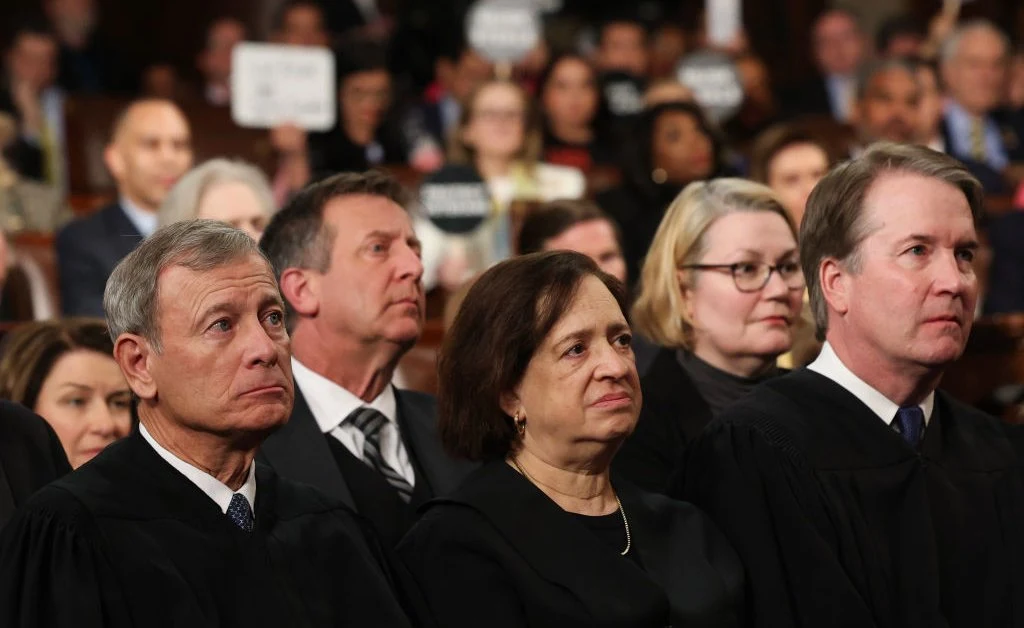
In a major setback for President Donald Trump's economic policies, the Supreme Court on Friday struck down his emergency tariffs, dealing a sharp blow to the centerpiece of his economic agenda. The 6-to-3 decision, authored by Chief Justice John Roberts, ruled that Trump lacked the authority to impose sweeping import taxes by claiming a national emergency. The ruling immediately invalidates a broad set of tariffs that Trump imposed last year on nearly all imports, including reciprocal duties on dozens of countries and additional levies tied to the fentanyl crisis.
As the news spread, businesses and analysts alike began to assess the implications of the ruling, which sets firm limits on how far presidents can go in using emergency powers to reshape global trade. The decision not only curtails a policy Trump has repeatedly credited with strengthening American leverage abroad but also carries major financial and legal consequences. The government will no longer be able to collect tens of billions of dollars in tariff revenue under the International Emergency Economic Powers Act (IEEPA), a 1977 statute intended for national emergencies.
The case centered on Trump's April 2 announcement of what he called "Liberation Day" tariffs: a baseline duty of 10% on most imports, along with higher tariffs on certain nations that failed to reach trade agreements with the United States, and additional levies on certain goods from China, Mexico, and Canada. The Trump Administration argued that persistent trade deficits and the flow of fentanyl across U.S. borders constituted national emergencies that justified invoking IEEPA. However, the Supreme Court agreed with lower courts that the law could not be read to grant what one judge described as "unbounded tariff authority" to the president.
**The Broader Shift**
The ruling marks a significant shift in the balance of power between the executive and legislative branches. As Justice Elena Kagan argued during oral arguments, the Constitution assigns the power to impose taxes and duties to Congress, and IEEPA does not clearly authorize the President to levy tariffs of indefinite scope and duration. The decision not only limits Trump's ability to use emergency powers for trade policies but also sets a precedent for future cases, potentially restricting the President's authority to take sweeping actions without congressional approval.
In a statement, Trump expressed disappointment with the ruling, warning that the decision would leave the nation "defenseless" against foreign trade challenges. However, the Supreme Court's ruling makes it clear that the President's authority to impose tariffs via IEEPA is not limitless. The decision does not invalidate all of Trump's tariffs, as duties imposed under other statutes remain intact. However, the ruling does dismantle the most expansive part of Trump's trade program, leaving his Administration with narrower options to impose temporary tariffs or initiate new investigations into unfair trade practices.
**The Long-Term Consequences**
The decision will have significant financial and legal implications for companies that paid the now-invalidated emergency tariffs. As of mid-December, the tariffs had raised roughly $130 billion in revenue, which the Administration had counted on to help finance tax cuts enacted last summer. Scores of businesses that paid the tariffs are expected to press for refunds, setting up potentially complex litigation over billions of dollars already collected. The process of returning the billions of dollars collected from importers is likely to be a "mess," as Justice Brett Kavanaugh warned in his dissent.
As the Supreme Court prepares to rule on other contentious initiatives, including Trump's efforts to curb birthright citizenship and remove a member of the Federal Reserve's board, the ruling on emergency tariffs serves as a reminder of the limits of executive power and the importance of congressional oversight.
