

A recent investigation by the BBC has uncovered a staggering number of illegal waste tips operating across England, with at least 517 active sites at the end of last year. This disturbing trend highlights the scale of the problem, with hundreds of sites shut down in 2024/25 unable to stem the flow of waste crime.
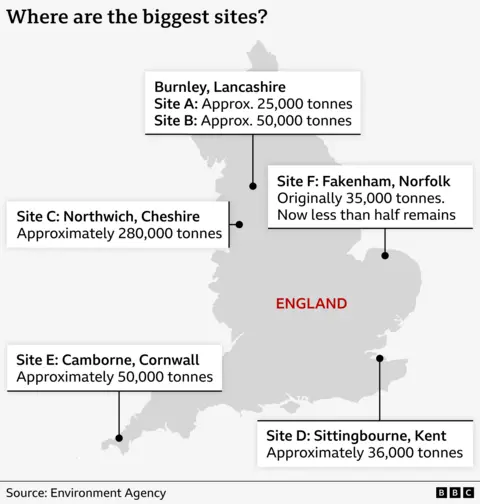
The Environment Agency has released data revealing the extent of the issue, with 11 'super sites' containing tens of thousands of tonnes of rubbish. These sites include a 280,000-tonne site in Cheshire, two 50,000-tonne sites in Lancashire and Cornwall, a 36,000-tonne tip in Kent, and a 20,000-tonne dump in Oxfordshire. These massive sites are often hidden in countryside locations, camouflaged as agricultural land.
Cash-Driven Cartels: The Organised Crime Gangs Behind Waste Trafficking
According to police, many of these sites are run by organised crime gangs, who charge businesses significantly less than legitimate operators to take and bury waste. This lucrative trade has seen these gangs amass fortunes by exploiting loopholes in waste management regulations. The Environment Agency has stated its commitment to tackling waste crime and disrupting these syndicates.
Businesses looking to dispose of waste legally are forced to pay premium site fees to use licensed landfill sites. These fees are directly tied to the amount and type of waste being disposed of, with landfill tax charged at just over £126 per tonne. This financial burden, combined with the lure of cheaper rates, has driven many companies to seek out these illicit operations.
The Environment Agency's efforts to combat waste crime are ongoing, with a focus on dismantling these trafficking rings and holding perpetrators accountable. The consequences of inaction, however, are evident in the sheer scale of the problem. Until decisive action is taken, waste trafficking will continue to pose a significant threat to England's environment and public health.
As the Environment Agency 'pulls every lever' to disrupt waste crime, it is imperative that businesses, policymakers, and the general public remain vigilant. By working together, it may be possible to dismantle these networks and put an end to the scourge of waste trafficking in England.
%20(1)-Photoroom.png)