

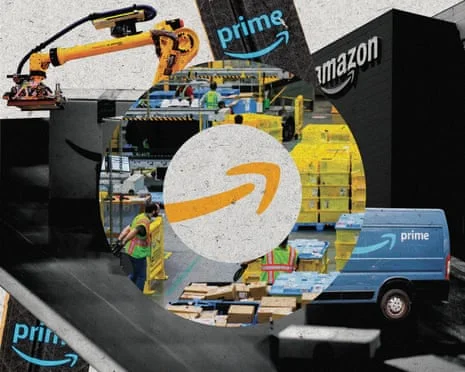
At Amazon's new Stone Mountain, Georgia facility, a fleet of Roomba-like robots efficiently navigate the 640,000-sq-ft, four-story warehouse, streamlining the logistics process. These robots are responsible for tasks such as shuffling between stacks, adding shipping labels, and arranging packages in pallets.
One of the primary reasons Amazon is investing billions in robotics is the significant reduction in labor costs and increased productivity. Unlike human workers, robots do not require bathroom breaks, allowing them to operate continuously without interruption. This advantage is particularly notable in facilities like the Stone Mountain warehouse, where the security guard's response to a request to visit the restroom before the tour highlights the emphasis on efficiency and security.
The public tour of Amazon's hi-tech warehouse offers a glimpse into the future of logistics, showcasing the company's commitment to innovation and automation. With its state-of-the-art facility, Amazon is poised to revolutionize the way goods are stored, packaged, and shipped, setting a new standard for the industry. As technology continues to advance, it will be interesting to see how other companies respond to Amazon's lead in robotics and automation.
Robotics and Efficiency
The integration of robots in Amazon's warehouse has significantly improved efficiency, allowing the company to process and ship orders more quickly. According to reports, the robots are able to navigate the warehouse with ease, reducing the time it takes to complete tasks and increasing overall productivity. This increased efficiency is likely to have a positive impact on economic growth, as faster and more reliable shipping can lead to increased customer satisfaction and loyalty.
What remains unclear is how the increased use of robots in warehouses will affect employment rates in the logistics industry. While robots may improve efficiency, they also have the potential to displace human workers, leading to job losses and economic disruption. As policymakers consider the implications of automation, they will need to balance the benefits of increased efficiency with the potential risks to workers and the economy.
Market Mechanisms and Social Impacts
The market mechanism driving the adoption of robots in warehouses is clear: companies like Amazon are seeking to reduce costs and increase efficiency. However, the social impacts of this trend are more complex, and will require careful consideration by policymakers and industry leaders. As the use of robots becomes more widespread, it will be important to monitor the effects on employment, economic growth, and social stability.
What should readers watch next is how other companies in the logistics industry respond to Amazon's lead in robotics and automation. Will they follow suit, or will they explore alternative approaches to improving efficiency and reducing costs? The answer to this question will have significant implications for the future of the industry, and for the workers and communities that depend on it.
Future Outlook and Risks
In the next few sessions, key risks to watch include the potential for job losses and economic disruption, as well as the challenges of integrating robots into existing logistics systems. However, there are also potential benefits to be realized, including increased efficiency, reduced costs, and improved customer satisfaction. As the industry continues to evolve, it will be important to monitor these developments closely, and to consider the potential implications for the economy and society as a whole.
The Bottom Line
- Amazon's investment in robotics is driving innovation and efficiency in the logistics industry.
- The use of robots in warehouses has the potential to displace human workers, leading to job losses and economic disruption.
- The future of the logistics industry will depend on the ability of companies and policymakers to balance the benefits of automation with the potential risks to workers and the economy.
