

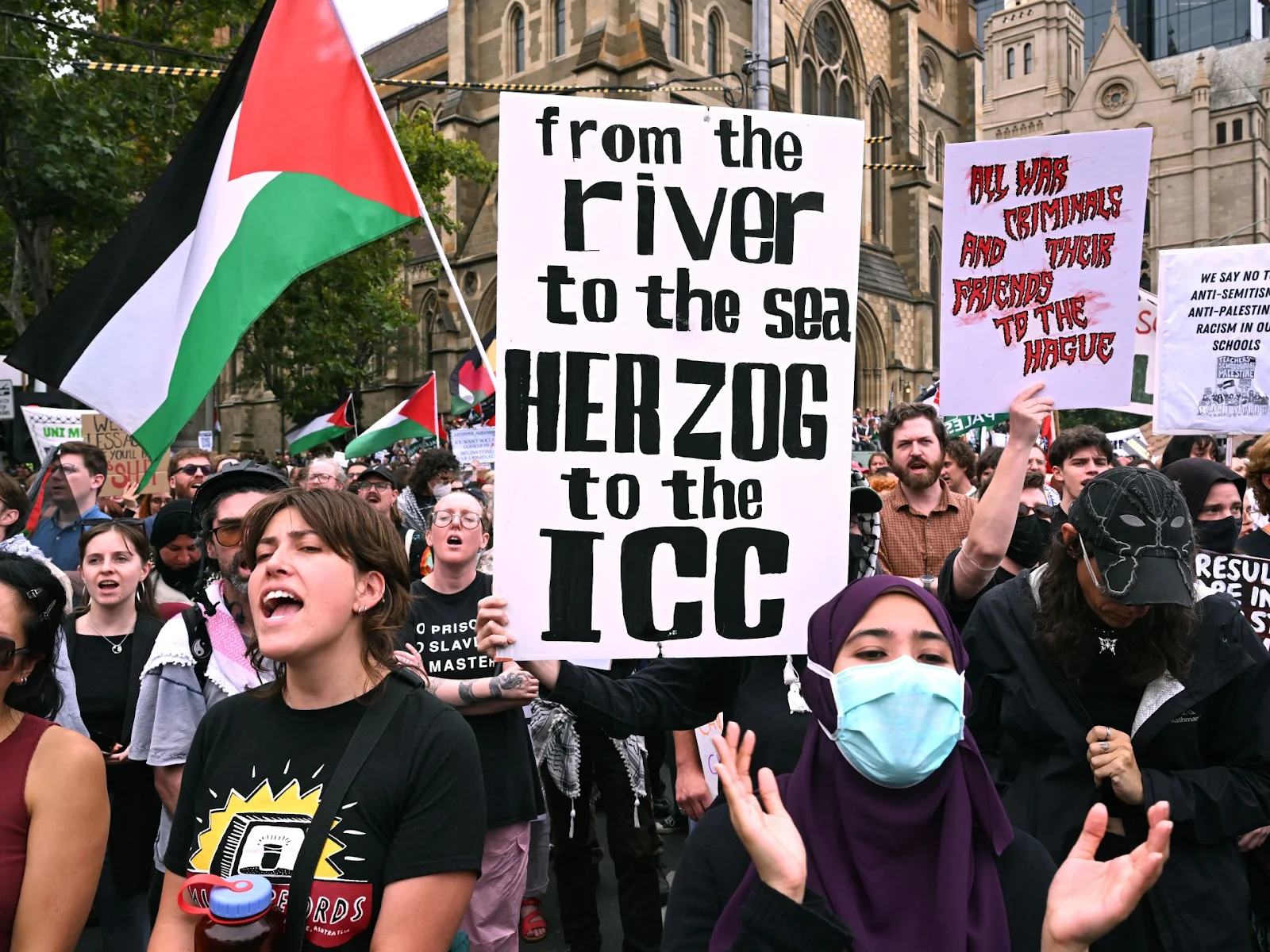
Protests have erupted in Sydney and Melbourne as Israeli President Isaac Herzog visits Australia, with demonstrators calling for an end to Israeli occupation. According to reports, the protests were peaceful, with participants holding signs that read 'War criminal not welcome' and 'Free Palestine'. The protests coincide with Herzog's meeting with victims of the Bondi Beach attack.
The visit has sparked controversy, with many Australians expressing opposition to Israel's policies in the occupied territories. Economists and policymakers are watching the situation closely, as it may have implications for Australia's diplomatic relationships in the region. The protests appear to indicate a growing awareness of the Israeli-Palestinian conflict among the Australian public.
Why this matters now is that the protests reflect a shift in public opinion, with many Australians increasingly sympathetic to the Palestinian cause. This shift may put pressure on the Australian government to re-evaluate its stance on the conflict. As political analysts note, the visit has highlighted the complexities of Australia's relationships with countries in the Middle East.
Strategic Implications
The protests have significant strategic implications, as they may influence Australia's diplomatic efforts in the region. According to sources, the Australian government is seeking to balance its relationships with both Israel and Arab countries. The visit has also sparked debate about the role of economic sanctions in resolving the conflict.
What remains unclear is how the protests will affect Herzog's agenda during his visit. While the Israeli president has met with Australian leaders, the protests may limit his ability to engage with the broader public. As social media platforms amplify the voices of protesters, the Israeli government may face increased pressure to respond to their demands.
What should readers watch next is how the Australian government responds to the protests and the broader diplomatic implications of the visit. The government may face pressure to issue a statement on the Israeli-Palestinian conflict, which could have significant implications for its relationships with countries in the region.
Diplomatic Shifts
The visit has highlighted the complexities of Australia's diplomatic relationships in the Middle East. As policymakers navigate these relationships, they must balance competing interests and priorities. The protests have also underscored the importance of public opinion in shaping diplomatic efforts.
The market mechanism at play is the growing awareness of the Israeli-Palestinian conflict among the Australian public, which is driving demand for policy change. Second-order effects of the protests may include increased scrutiny of Australian companies operating in the occupied territories.
Forward Outlook
Key risks in the next few sessions include further protests and potential disruptions to Herzog's schedule. The Australian government must navigate these risks while balancing its diplomatic relationships in the region. Potential next steps include a statement from the government on the Israeli-Palestinian conflict, which could have significant implications for its relationships with countries in the region.
The Bottom Line
- The protests against Herzog's visit reflect a shift in Australian public opinion on the Israeli-Palestinian conflict.
- The visit has significant strategic implications for Australia's diplomatic relationships in the region.
- The Australian government must navigate the complexities of the conflict while balancing competing interests and priorities.
