

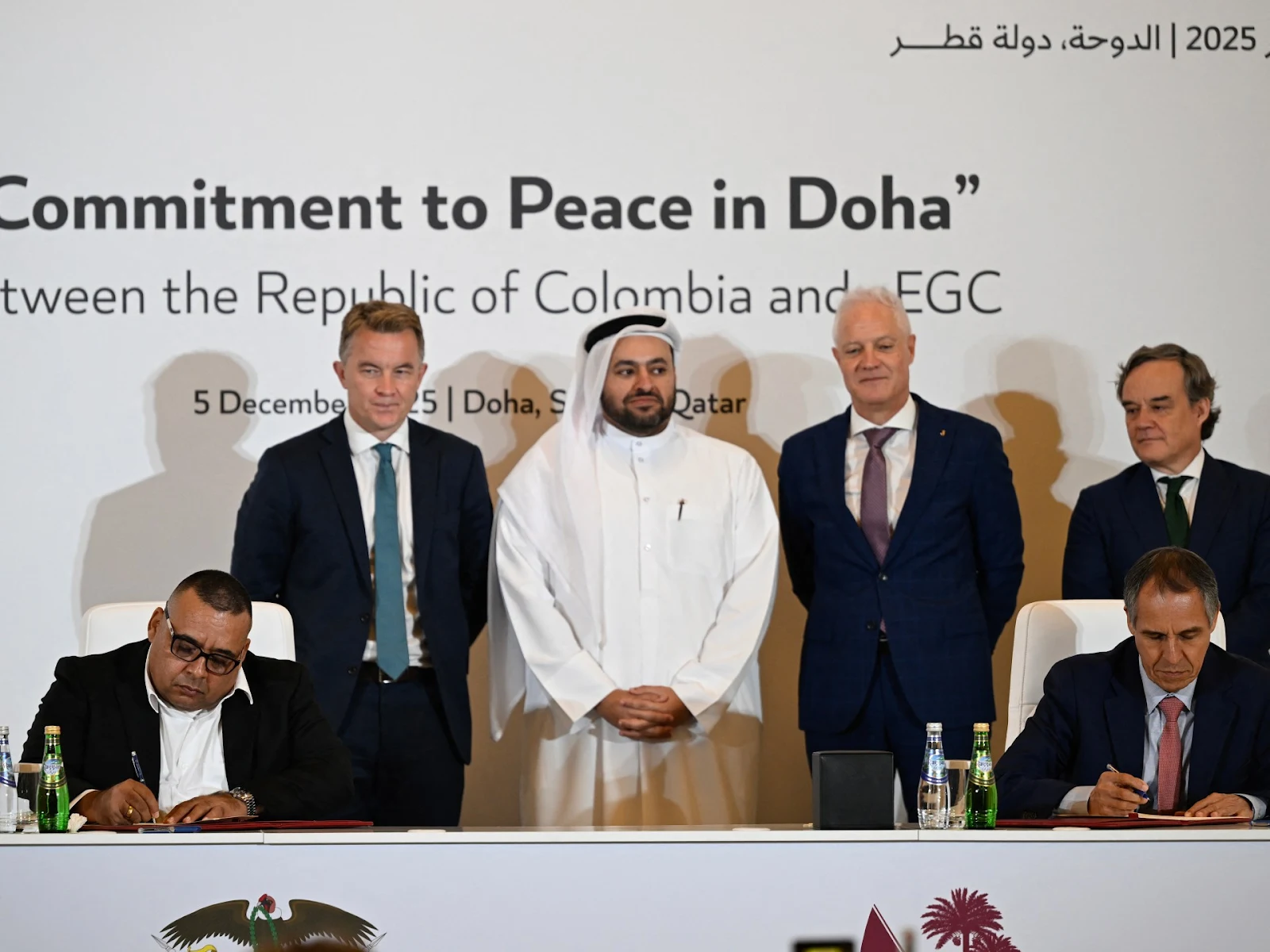
Colombia’s government has announced the resumption of peace talks with the Gulf Clan, also known as the Gaitanist Self-Defence Forces (ECG), after a temporary suspension.
The talks were paused earlier this month after President Gustavo Petro pledged to target the group’s leader, Jobanis de Jesus Avila Villadiego, known as Chiquito Malo, as part of a deal with the United States.
The Gulf Clan, considered one of the country’s largest cartels with approximately 9,000 fighters, expressed concern over the government’s intentions and sought clarity on the scope of its actions.
Peace Talks Background
The peace talks, mediated by the Catholic Church and the governments of Qatar, Spain, Norway, and Switzerland, are part of Petro’s “Total Peace” programme, aimed at bringing armed groups and criminal networks to the negotiating table.
Petro’s government has faced pressure from the US to take more aggressive action against drug trafficking, with President Donald Trump threatening to attack Colombia in January.
However, relations between the two leaders have warmed in recent weeks, particularly since Petro’s visit to the White House on February 3.
Internal Conflict Context
Colombia’s internal conflict, which has lasted for six decades, has pitted criminal groups, left-wing rebels, government forces, and right-wing paramilitaries against each other.
The Gulf Clan is one of several armed groups vying for control of territory, and its designation as a “foreign terrorist organisation” by the US in December has added to the complexity of the situation.
The peace talks have faced setbacks, including the suspension of talks with the National Liberation Army (ELN) in January, following an outbreak of violence near the border with Venezuela.
International Implications
The resumption of peace talks with the Gulf Clan is seen as a significant development in Colombia’s efforts to address its internal conflict, which has historically been the world’s largest producer of cocaine.
Petro’s government has repeatedly rejected allegations that it has not done enough to stem drug trafficking, pointing to historic drug busts, including the seizure of 14 tonnes of cocaine in November, as evidence of its efficacy.
The issue of how to address Colombia’s ongoing internal conflict is set to be a major election issue in May, when the country chooses a new president.
Source: Al Jazeera
