

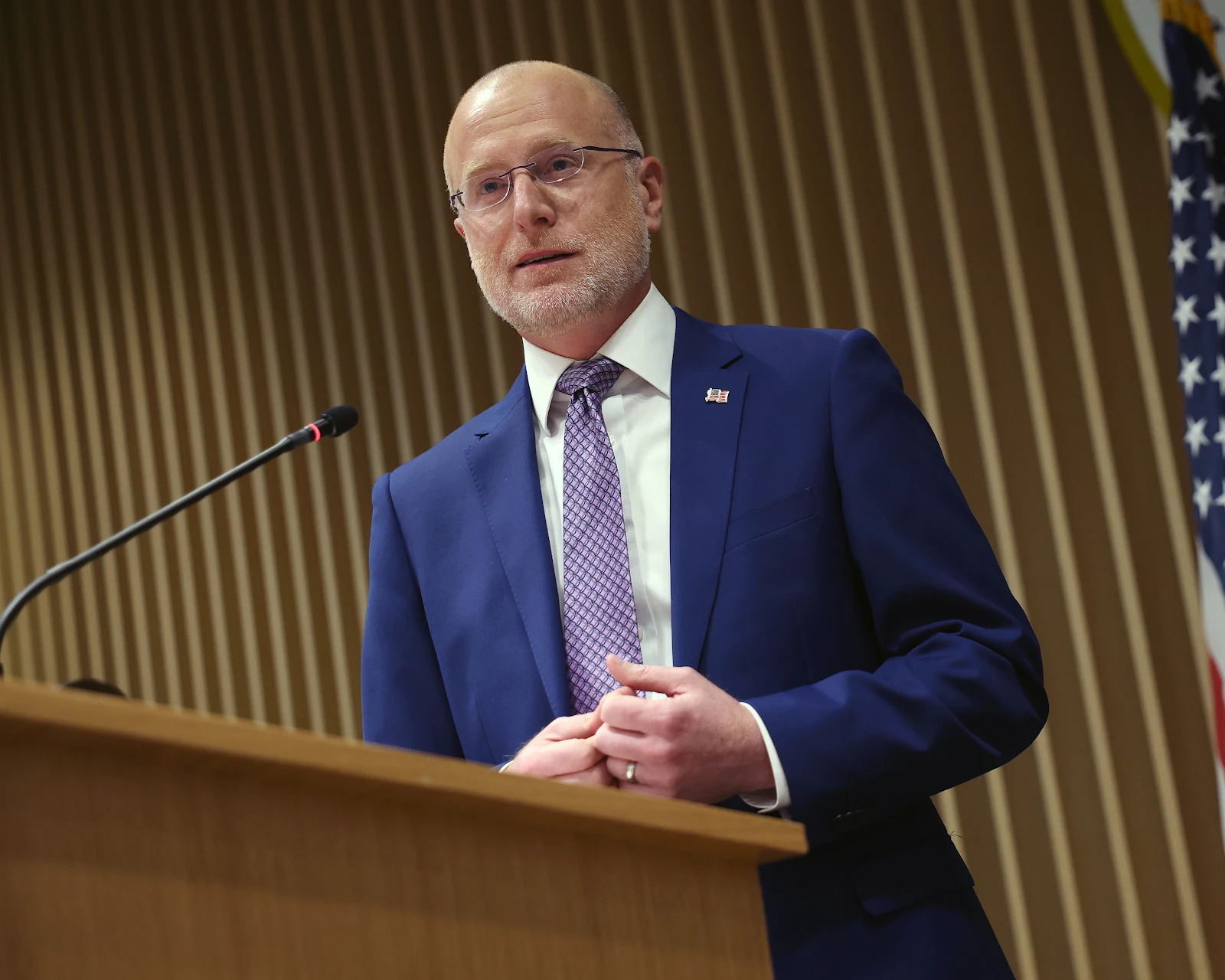
The Federal Communications Commission (FCC) has opened an enforcement action into ABC's The View, according to FCC Chair Brendan Carr, who claimed that journalists were misled into covering claims made by late-night host Stephen Colbert. Colbert had accused the Trump administration and CBS of censorship after he was allegedly blocked from interviewing Texas Senate candidate James Talarico on his show.
Carr, a pro-Trump chairman of the FCC, made his comments at an FCC meeting, stating that the media should feel ashamed for having been lied to and then reporting on those lies. He emphasized that the FCC was simply enforcing the rules on the books, including the equal time rule, which was enacted as part of the Communications Act of 1934. As reported by The Guardian, this rule requires broadcasters to provide comparable air time to all legally qualified candidates.
CBS had countered Colbert's claims, stating that it had not blocked him from interviewing Talarico, but had merely provided legal guidance that such an interview might trigger equal time regulations. The network's parent company, Disney, had not requested an exception for a bona fide news interview, according to Carr. The controversy has sparked a debate about the equal time rule and its application to late-night and daytime talk shows.
Colbert had initially accused CBS of censorship, but later aired the interview with Talarico on YouTube, where it has garnered nearly 6.1 million views. The controversy has also been a boon for Talarico's campaign, which has raised $2.5 million in the 24 hours since Colbert's initial comments. The FCC's enforcement action into ABC's The View is related to an appearance Talarico made on the program earlier in the month.
Academic Perspectives
Gigi Sohn, a former counselor to then-FCC Chair Tom Wheeler during Barack Obama's administration, expressed concerns about the unequal enforcement of the equal time rule. She stated that if Stephen Colbert is going to give James Talarico 20 minutes to basically give a campaign speech, then CBS should provide equal opportunity. Sohn emphasized that the onus is on rival candidates, not the FCC, to request and pursue the equal time opportunity.
Sohn also criticized Carr for starting his own investigations when nobody is complaining, stating that this is not how the equal opportunities rule is supposed to work. She fears that the FCC's enforcement of the rule will be unevenly applied to crack down on liberal media opposition to Trump. Anna M Gomez, the lone Democrat on the FCC, also took a different approach, stating that the equal time rule issue is just one of a long pattern of this administration using the FCC to go after content it doesn't like.
Labour Market Data
The controversy has highlighted the complexities of the equal time rule and its application to modern media. The rule was enacted in 1934, and its application to late-night and daytime talk shows has been the subject of debate. The FCC's guidance issued in January stated that daytime and late-night talk shows would not automatically be eligible for exemptions to the equal time rule.
Carr's comments have sparked a debate about the role of the FCC in regulating media content. He emphasized that every broadcaster in the country has an obligation to be responsible for the programming that they choose to air, and that they are responsible whether it complies with FCC rules or not. The controversy has also raised questions about the relationship between the media and the government, with some critics accusing the FCC of using its enforcement powers to pressure broadcasters to self-censor.
Personal Accounts
Colbert has been critical of the FCC's enforcement of the equal time rule, stating that he was surprised that CBS had not consulted him on the statement it released on Tuesday afternoon. He emphasized that he did not wish to start a war with CBS, but was surprised that the network had not stood up to what he called bullies. The controversy has sparked a debate about the role of the media in covering political campaigns and the application of the equal time rule.
Carr ended his comments to reporters with an attack on Colbert, stating that the late-night host sees that his time in the limelight is coming to an end. Carr emphasized that this does not change the facts of what happened, and that the FCC will continue to enforce the equal time rule. The controversy has highlighted the complexities of the relationship between the media, the government, and the FCC, and has sparked a debate about the role of the FCC in regulating media content.
