

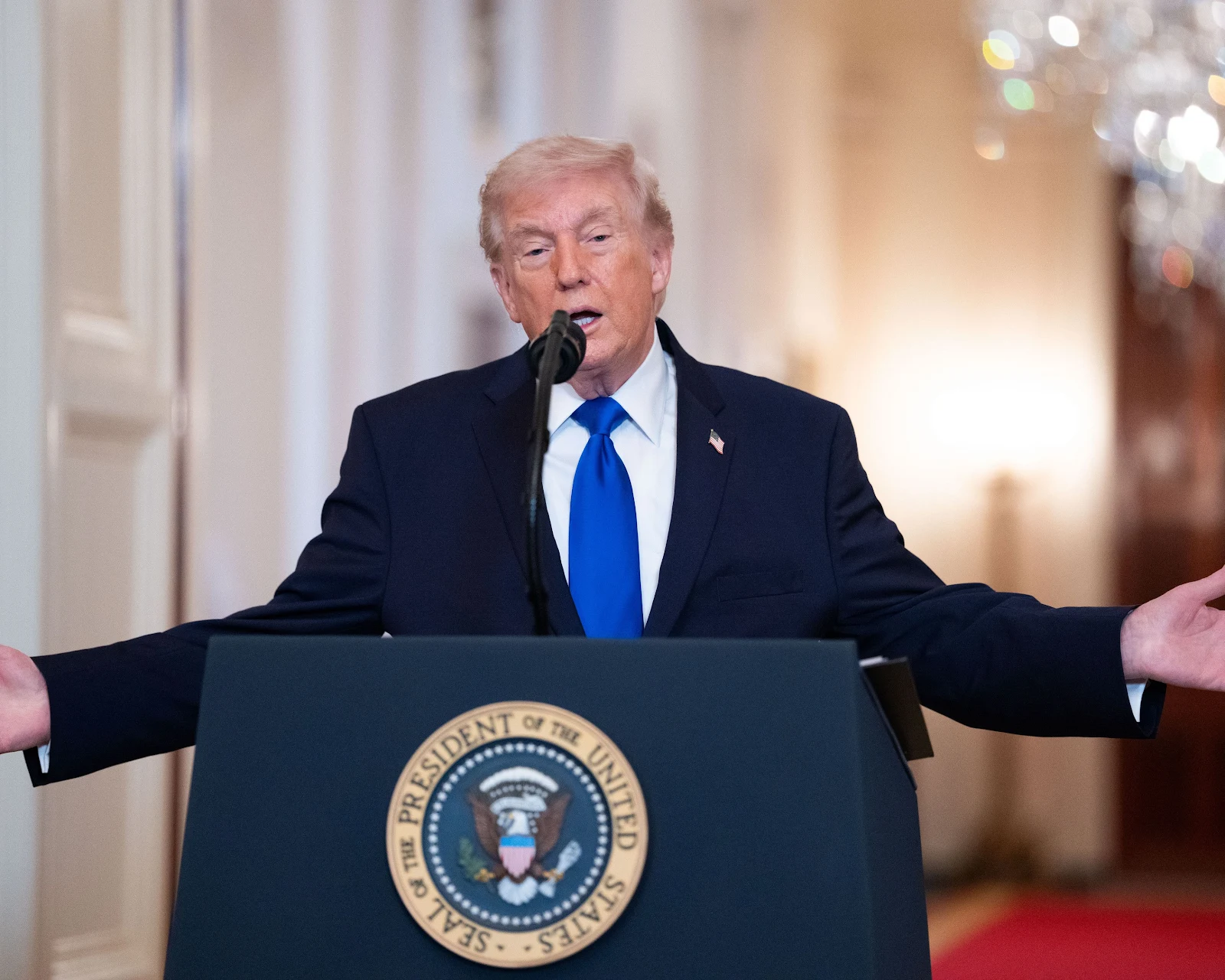
The global economy is experiencing significant shifts, with the introduction of new tariffs, major deals in the AI sector, and market volatility. President Donald Trump's new tariffs have come into effect, with a 10% rate applied to certain imports, following a US supreme court ruling that blocked many of his previous import taxes.
The tariffs, applied under Section 122 of the 1974 Trade Act, have triggered uncertainty among US trading partners, including the UK and the EU. The EU has paused the ratification process of a deal struck with the US last July, which included 15% blanket tariffs on EU imports. A spokesperson for Keir Starmer stated that "no one wants to see a trade war" but noted that "nothing is off the table" regarding potential retaliatory measures.
In the UK, the Bank of England governor, Andrew Bailey, has discussed the country's economic outlook, stating that the UK appears to be ahead of other economies in terms of investment to improve productivity. However, Bailey also noted that the labor market is experiencing a period of "labor hoarding," which could lead to reduced hiring and potential job losses.
Economic Outlook and Labor Market
Huw Pill, chief economist at the Bank of England, touched on the state of the labor market, stating that there has been an element of shedding labor that was previously hoarded. Bailey added that evidence suggests this "labor hoarding" is unwinding, with companies appearing to be not hiring. Megan Greene, a member of the monetary policy committee, expressed concerns about wage growth and inflation expectations, stating that she would like to see further indications of these trends before voting for an interest rate cut.
The governor of the Bank of England, Andrew Bailey, has also discussed the bank's decision to hold interest rates at 3.75%, stating that inflation is expected to return to the 2% target "sooner than we were expecting." UK inflation slowed to 3% in January, and Bailey noted that the bank's expectations of 2% inflation in the late spring are "pretty much baked in."
AI and Technology
Meta has agreed to a multi-billion dollar chip deal with Advanced Micro Devices (AMD), which will supply six gigawatts' worth of chips to Meta, starting with one gigawatt of the company's forthcoming MI450 flagship hardware. AMD's chief executive, Lisa Su, stated that the deal will include two generations of AMD's CPUs, with a custom CPU tuned to deliver powerful performance while keeping energy consumption low.
Matt Britzman, senior equity analyst at Hargreaves Lansdown, noted that the Meta/AMD deal indicates the AI arms race has "shifted up another gear," with Meta locking in supply and diversifying away from a single vendor. However, Britzman also stated that AMD's need to give up a 10% stake suggests it may be struggling to generate organic demand.
Market Volatility and Credit Concerns
The stock market has experienced volatility, with shares in tech companies such as IBM suffering due to concerns about AI risks. Jamie Dimon, chief executive of JPMorgan, has warned about the risk of bad loans in the banking system, stating that he is starting to see parallels with the era before the 2008 financial crisis. Kathleen Brooks, of the broker XTB, noted that these fears are being echoed across the Atlantic, but it could be an over-reaction.
Oil prices have reached seven-month highs due to heightened tensions between the US and Iran ahead of nuclear talks. James Hosie, a research analyst at Shore Capital, stated that oil markets are "rationally trying to price in a risk premium for oil prices, given the disruption a conflict could have on global supplies."
As the global economy continues to evolve, it is essential to monitor these developments and their potential impact on markets and industries. The introduction of new tariffs, major deals in the AI sector, and market volatility are all significant factors that will shape the economic landscape in the coming months.
