

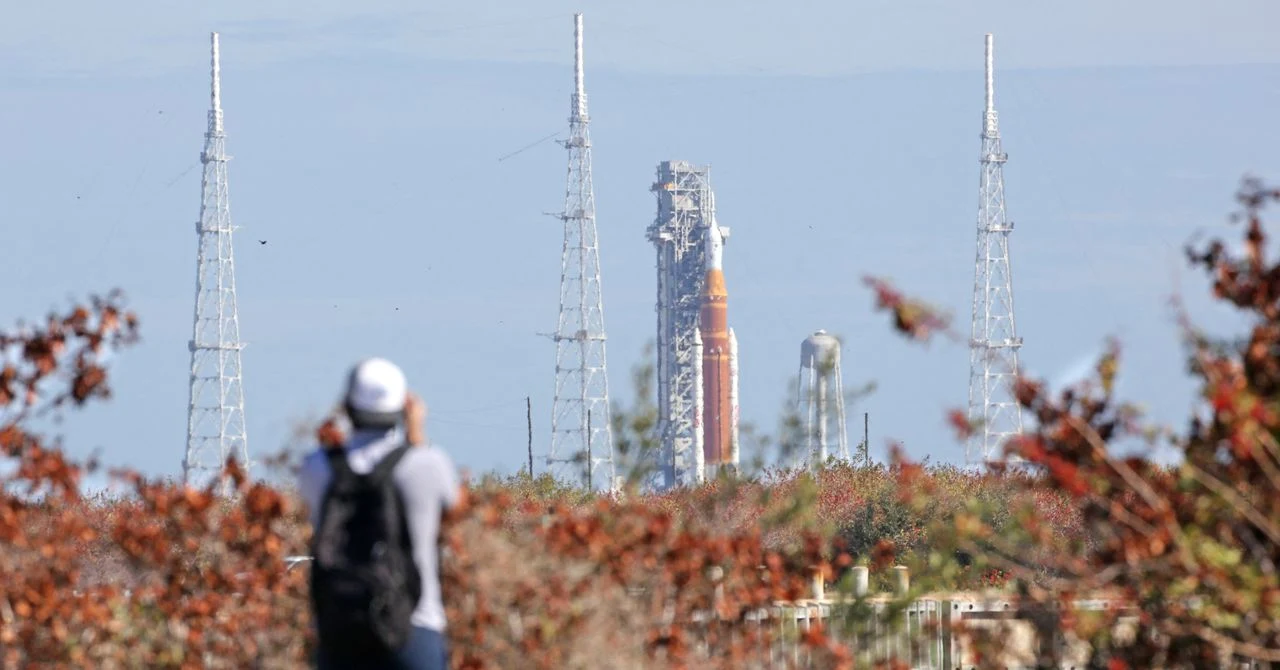
NASA's Artemis II lunar mission has been delayed once again, with a new launch window set for April, due to a problem with the rocket's helium flow in the interim cryogenic propulsion stage of the Space Launch System (SLS).
According to NASA administrator Jared Isaacman, the failure was caused by an interruption in the helium flow, which is essential for purging the engines and pressurizing the fuel tanks. This system had functioned correctly in two dress rehearsals conducted this month, but the failure occurred during a routine operation.
The rocket is now on its way back to the Vehicle Assembly Building (VAB) for repairs, and NASA engineers will have to fix the issue before proceeding with the launch.
Inside the Platform
The Artemis II mission is a crucial step towards NASA's goal of returning to the moon and establishing a sustainable presence on the lunar surface. The mission will demonstrate NASA's technical capabilities to return to the moon and begin a new phase of space exploration.
The Orion capsule will travel farther than any other manned spacecraft during its 10-day mission, surpassing the record of 400,171 kilometers set by Apollo 13. The return will conclude with Orion's landing in the Pacific Ocean off the coast of San Diego, California.
The Infrastructure Question
The delay highlights the complexity and challenges of space exploration, particularly when it comes to the infrastructure and systems required to support such missions. The Space Launch System (SLS) is a critical component of NASA's Artemis program, and the helium flow issue is a reminder of the intricate systems that must work together seamlessly for a successful launch.
NASA's experience with the Artemis I mission, which also encountered issues with helium flow, suggests that the agency is still working to refine its systems and processes. The success of the Artemis II mission will depend on NASA's ability to address these technical challenges and ensure the reliability of its systems.
Regulatory Pressure Builds
The delay may also have implications for NASA's regulatory framework and the agency's relationships with its stakeholders. As NASA works to return to the moon and establish a sustainable presence on the lunar surface, it will need to navigate a complex regulatory environment and balance the demands of its various stakeholders.
According to Isaacman, the President created the Artemis program to surpass what America achieved during Apollo, and the agency is committed to returning to the moon and undertaking continuous missions to and from the lunar environment.
