

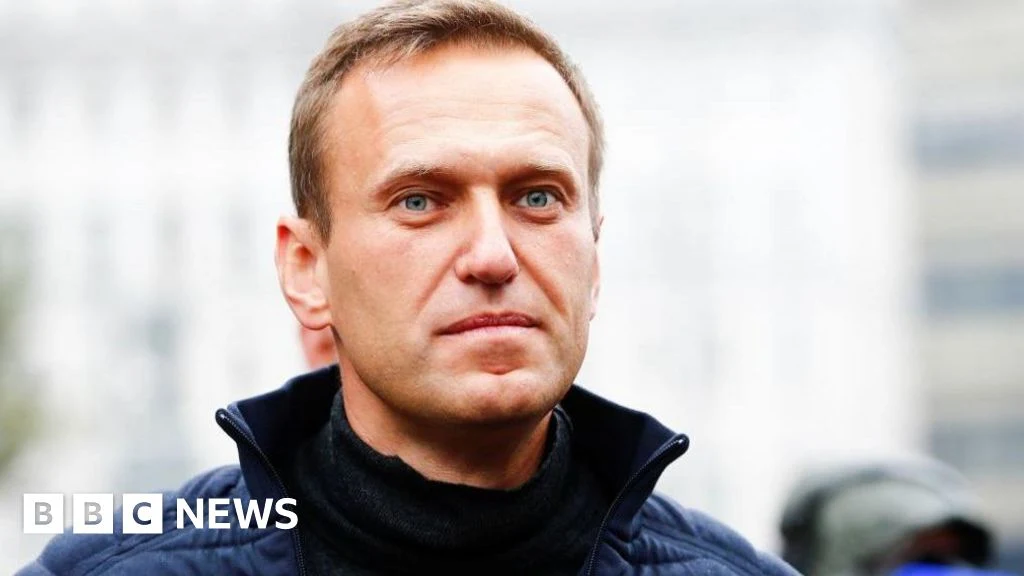
According to the UK and European allies, Russian opposition leader Alexei Navalny was killed using a poison developed from a dart frog toxin.
Foreign Secretary Yvette Cooper stated that "only the Russian government had the means, motive and opportunity" to use the poison while Navalny was imprisoned in Russia, as reported by the BBC.
Cooper made the announcement at the Munich Security Conference, where she met with Navalny's widow, Yulia Navalnaya.
Police Response and Timeline
The UK, Sweden, France, Germany, and the Netherlands issued a joint statement blaming the Kremlin for Navalny's death.
Navalny died suddenly in jail on 16 February 2024 at the age of 47, and his wife had consistently argued that he was killed by poisoning.
Investigation and Findings
The poison, called epibatidine, is 200 times more potent than morphine and can cause muscle twitching, paralysis, seizures, and respiratory failure, according to toxicology expert Jill Johnson.
Johnson described epibatidine as an "incredibly rare way to poison a person" and stated that finding the wild frog that produces the toxin is "almost impossible".
Official Statements and Reactions
UK Prime Minister Sir Keir Starmer praised Navalny's "huge courage" and said his determination to expose the truth has left an enduring legacy.
French Foreign Minister Jean-Noël Barrot paid tribute to Navalny, suggesting he was "killed for his fight in favour of a free and democratic Russia".
Navalnaya reacted to the announcement, saying she was certain from the first day that her husband had been poisoned and thanked the European states for uncovering the truth.
Russian Response
Moscow has dismissed the finding as "an information campaign", with Kremlin spokesperson Maria Zakharova stating that the talks and statements are aimed at distracting attention from the West's pressing problems.
