

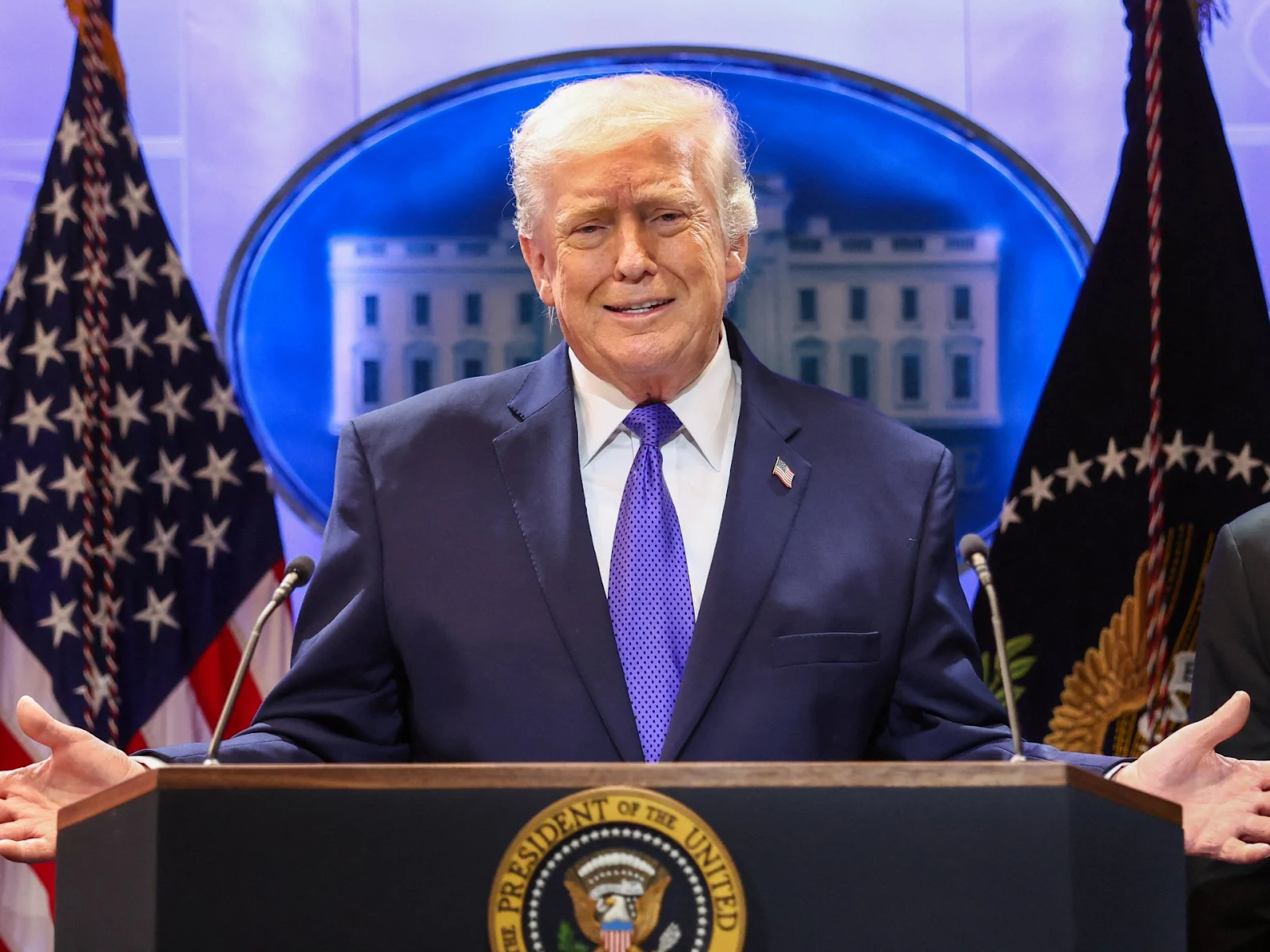
The United States Supreme Court has struck down President Donald Trump's global tariffs, ruling that he exceeded his authority by invoking a 1977 law to impose the tariffs.
In a 6–3 decision, the court agreed that the International Emergency Economic Powers Act (IEEPA) does not give the president the power to unilaterally impose sweeping tariffs. Chief Justice John Roberts wrote in the ruling that the 1977 law was designed to allow presidents to respond to specific national emergencies, but not to overhaul US trade policy.
Trump had argued that the tariffs were justified under the IEEPA, citing six national emergencies, including the long-running US trade deficit and the surge in overdoses linked to the opioid fentanyl. However, the court concluded that using IEEPA in this way went beyond the authority Congress intended to grant.
Official Statements
Trump called the ruling “a disgrace”, while Chris Edelson, a lecturer at the University of Massachusetts Amherst, told Al Jazeera that the ruling means Trump “acted illegally” and was “breaking the law”.
The Trump administration has not released tariff collection data since December 14, but Michael Pearce, chief US economist at Oxford Economics, estimates that more than $130bn in tariffs have already been collected under the emergency declarations.
International Trade Implications
The ruling is likely to trigger a prolonged legal battle over whether the collected tariffs must be refunded. Edelson said, “What happens? Do they get this money back? The companies are going to want it back. I don’t know how that’s going to work”.
Despite the ruling, Trump still has other legal avenues to pursue trade restrictions, including Section 232 of the Trade Expansion Act of 1962 and Section 301 of the Trade Act of 1974.
Reaction and Future Implications
Trump criticised the ruling, arguing that presidents should have sweeping trade authority. However, Bruce Fein, a former US associate deputy attorney general and constitutional lawyer, described the ruling as a “clear signal” that the president does not have unlimited unilateral authority.
Al Jazeera’s Alan Fisher, reporting from Washington, DC, said, “The Supreme Court will follow the law, and that doesn’t mean that Donald Trump will get a blank cheque to do whatever he wants”.
Source: Al Jazeera
