

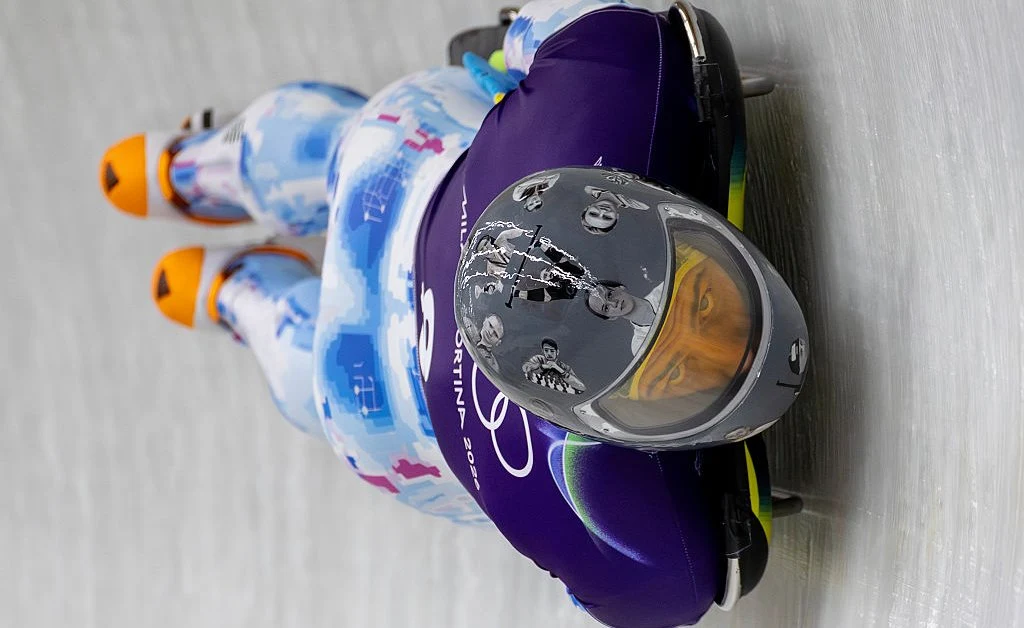
On a crisp, snowy morning in Cortina, Italy, a young Ukrainian athlete stands on the ice, gazing down at the finish line. Vladyslav Heraskevych, a 22-year-old skeleton racer, is just hours away from competing in the event that will define his Olympic dreams. But as he prepares for the run of his life, Heraskevych faces a more daunting challenge: the International Olympic Committee's (IOC) ban on political speech.
Heraskevych has chosen to wear a helmet emblazoned with the images of Ukrainian athletes killed in the war with Russia. The 'remembrance helmet' is a powerful symbol of his country's struggle for freedom and the IOC has deemed it a violation of Rule 50, which prohibits 'demonstrations or political, religious or racial propaganda' in Olympic sites.
'He can, and we would encourage him, to express his grief, but in the end let me be clear. It's not the message, it's the place that counts,' said IOC spokesperson Mark Adams at a recent press conference. 'There are 130 conflicts going on in the world. We cannot have 130 different conflicts featured, however terrible they are, during the field of play, during the actual competition.'
Heraskevych has vowed to defy the IOC's ban and wear the helmet during competition, threatening to be disqualified. But for some, his stance is more than just a matter of individual freedom. It's a battle for the very soul of the Olympic Games.
A Turning Point
The IOC has long sought to maintain the 'neutrality' of the Olympics, separating sport from politics. But the reality is more complex. The 1955 Olympic Charter already prohibited 'demonstrations or propaganda' in Olympic sites, and subsequent rule changes have expanded the scope of prohibited protests.
The current Rule 50 guidelines specify venues where protests and demonstrations are not permitted, including fields of play, the Olympic village, and medal ceremonies. But they also acknowledge the importance of expression, specifying that 'expressing views is different from protests and demonstrations.'
For Heraskevych, this is not just about his own individual rights. It's about the Ukrainian people's right to remember and honor their fallen athletes. It's about the power of sport to transcend politics and bring people together.
Inside the Community
The Ukrainian team has rallied behind Heraskevych, with President Volodymyr Zelensky offering his support on social media. 'Thank you, Vladyslav, for reminding the world of the price of our struggle,' Zelensky wrote. 'This truth cannot be inconvenient, inappropriate, or called a 'political demonstration at a sporting event.'
The Ukrainian athletes' support for Heraskevych is not isolated. Other athletes, including luger Olena Smaha and skier Dmytro Shepiuk, have publicly demonstrated their solidarity with the skeleton racer. Together, they are pushing the IOC to reconsider its stance on Rule 50.
The Policy Debate
The debate over Rule 50 is not new. In 2024, the Refugee Olympic Team athlete Manizha Talash was disqualified for wearing a cape with the words 'free Afghan women' during a competition. But other recent acts of protest at the Games have not been met with disciplinary action, raising questions about the consistency of IOC enforcement.
As the Olympics continue, the world watches with bated breath. Will Heraskevych be disqualified for wearing the remembrance helmet? Will the IOC rethink its stance on Rule 50? The answers remain unclear, but one thing is certain – the politics of protest will continue to shape the Olympic Games, for better or for worse.
