

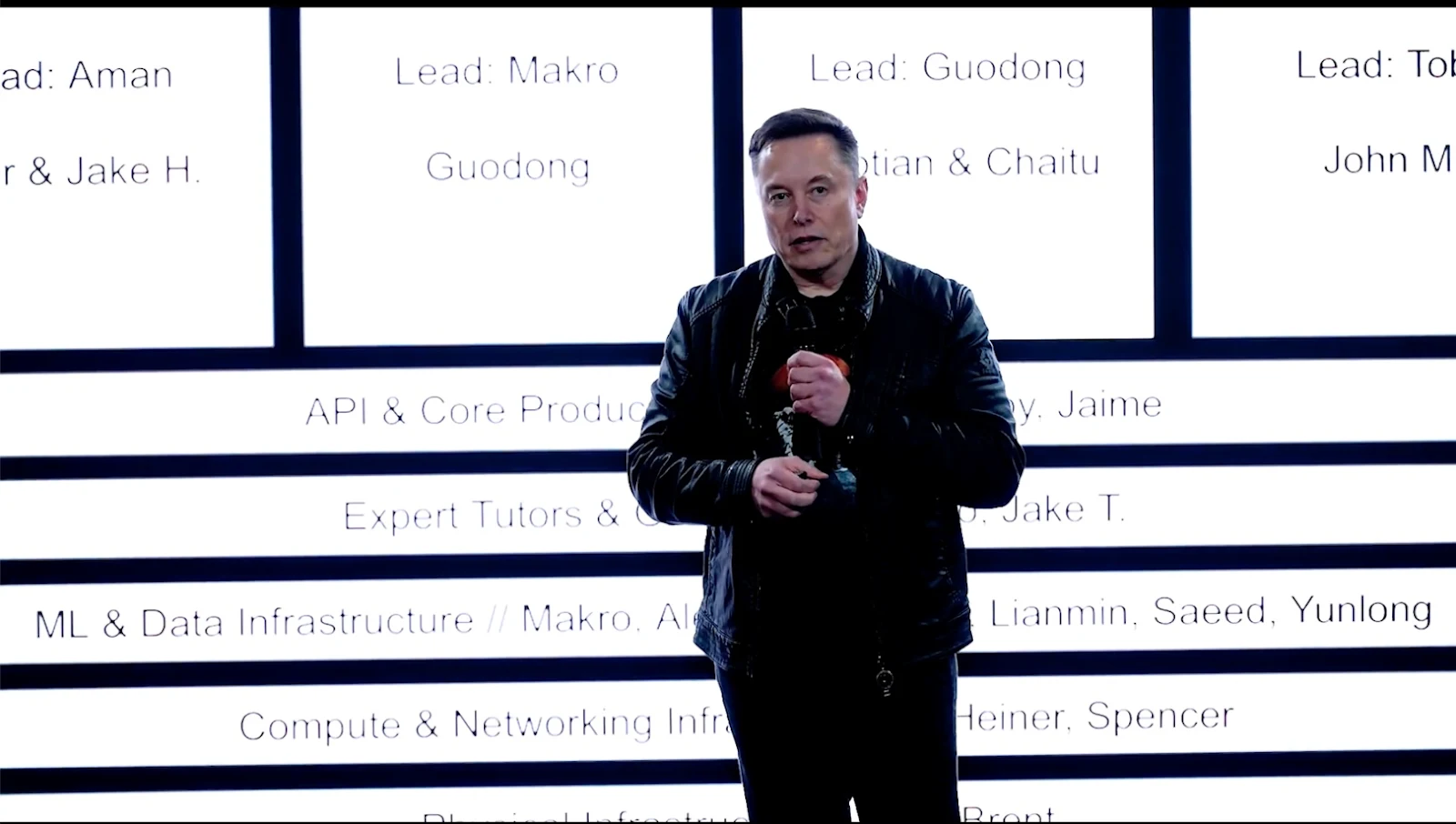
xAI has made its 45-minute all-hands meeting video publicly accessible on X, revealing significant details about its product roadmap and organizational structure. The move comes after The New York Times reported on the meeting, which may have influenced xAI's decision to post the video online.
xAI, formed just 30 months ago, has made remarkable progress with its small and talented team. The company has split into four primary teams: one focused on the Grok chatbot, another for the app's coding system, another for the Imagine video generator, and a team focused on the Macrohard project.
According to xAI's executives, the Imagine tool is generating 50 million videos a day, and over 6 billion images over the past 30 days. X's head of product, Nikita Bier, also announced that X has crossed $1 billion in annual recurring revenue from subscriptions.
The Funding and Growth Context
While xAI's growth metrics are impressive, the company has also faced challenges, including a string of departing employees due to a changing organizational structure. Elon Musk described the departures as layoffs, stating that the company's structure must evolve as it grows.
Musk also emphasized the importance of space-based data centers, envisioning a moon-based factory for AI satellites, including a lunar mass driver to launch them. This infrastructure, Musk believes, could enable the launch of an AI cluster capable of capturing significant portions of the sun's total energy output or even expanding to other galaxies.
Product Roadmap and Organizational Structure
Toby Pohlen, who will lead the Macrohard project, explained that the project aims to create an AI system that can do anything a computer can do. The new organizational system is designed to support xAI's ambitious product roadmap, which includes the development of advanced AI-powered tools and technologies.
Market and Regulatory Implications
xAI's plans have significant implications for the tech industry, particularly in the areas of AI, space exploration, and data centers. The company's focus on space-based data centers and AI-powered space exploration raises important questions about the future of the tech industry and its potential impact on society.
