

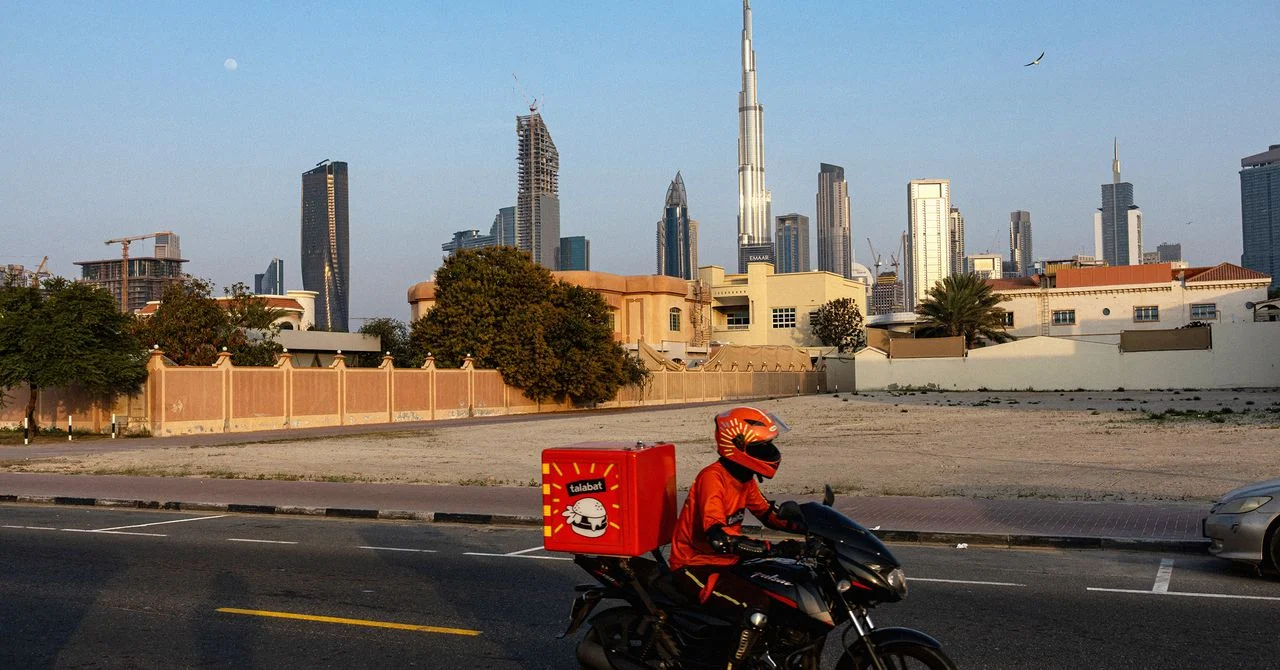
As missile alerts and interceptions continue to overwhelm the Gulf region, third-party delivery apps like Careem and Uber have mostly kept their services running, albeit with slower deliveries and altered routes.
This decision has sparked debate online, with critics arguing that delivery riders are being put at risk, while others point out that not ordering means drivers spend more time outside, in danger, to meet their daily quotas. The UAE Ministry of Human Resources and Emiratisation has recommended remote working for the private sector, except for essential work requiring physical presence.
According to a statement shared with WIRED Middle East, Careem is "assessing the safety of our operations area by area and in real time," providing immediate safety updates and guidance with drivers over WhatsApp groups and SMS. The company has also reinforced to its partners that drivers are not required to be online if they have concerns about doing so.
Inside the Platform
Delivery platforms like UberEats and Deliveroo have echoed Careem's sentiment, stating that the safety and wellbeing of their riders and partner drivers is their core priority. However, drivers for these platforms have reported receiving no safety guidelines or advice from the companies regarding the ongoing missile and drone strikes.
A Deliveroo driver, who spoke on condition of anonymity, explained that he works for a third-party logistics agency which provides drivers to Deliveroo. If he refuses to work, he says the agency fines him, and he also risks not meeting his daily quota for deliveries. This raises questions about the incentives and pressures faced by delivery drivers in conflict zones.
The Infrastructure Question
The UN's International Labour Organization (ILO) considers delivery drivers essential workers, playing a crucial role in ensuring that residents have access to food, medicine, and daily necessities, especially during times of crisis. This shift happened during the Covid-19 pandemic in 2020, as social distancing and quarantines made ecommerce indispensable, and transport drivers were deemed essential workers.
As the conflict in the Gulf region continues, the role of delivery apps and their drivers will remain crucial in maintaining normalcy and avoiding panic buying or empty shelves. However, it is essential to consider the risks borne by these drivers, mostly migrant workers, and the incentives and pressures they face in conflict zones.
Regulatory Pressure Builds
The UAE government's recommendation for remote working, except for essential work requiring physical presence, highlights the need for regulatory frameworks that balance the need for essential services with the safety and wellbeing of workers. As the use of delivery apps becomes increasingly widespread, especially in conflict zones, regulatory pressure will likely build to ensure that these platforms prioritize driver safety and provide adequate support and guidance to their workers.
