

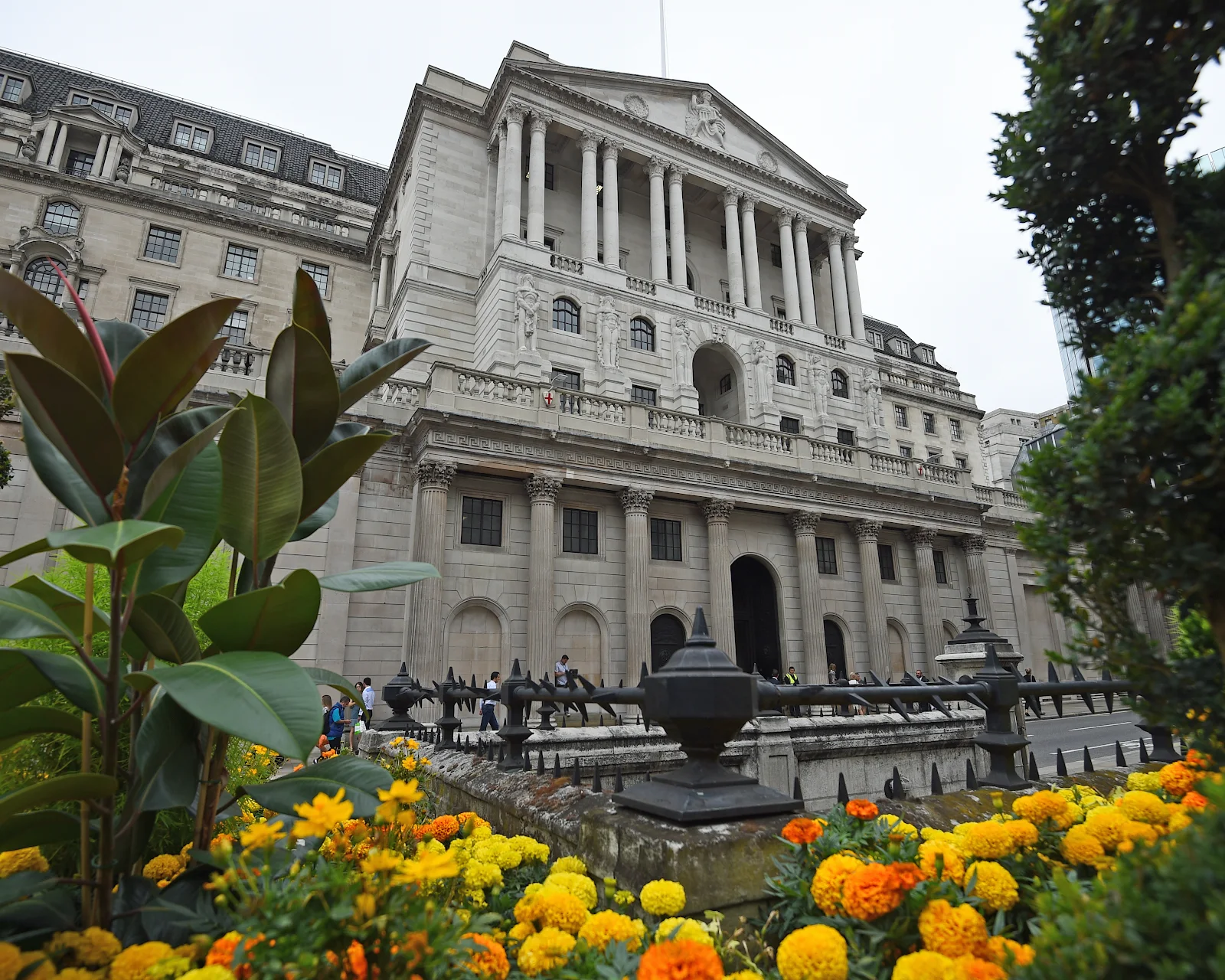
The ongoing Middle East crisis has introduced a new level of uncertainty into the global economy, with the Bank of England warning that CPI inflation will be higher in the near term as a result of the 'new shock to the economy'. As reported by The Guardian, this development has significant implications for interest rates and the broader economic landscape.
City traders are betting that the Bank of England will raise UK interest rates at least twice this year to combat the inflationary hit from the crisis. The money markets are now fully pricing in a quarter-point rise in Bank rate, to 4%, by June, and a second hike, to 4.35%, is fully priced in by September. These implied interest rates are volatile, reflecting the Bank's prediction that inflation will average 3% in the second quarter of this year, not fall to 2.1% as previously expected.
The situation is further complicated by the risk of 'second-round effects in wage and price-setting', where high energy bills lead to higher wage demands and higher prices in shops. An extended period of high oil prices as a result of the war in the Middle East could also 'crimp' the AI boom, according to the World Trade Organization's chief economist.
Global Trade Outlook
The WTO has cut its forecast for growth in world trade in goods to 1.9% this year, down from 4.6% in 2025. The organization warns that the slowdown could be even sharper if crude oil and liquefied natural gas prices remain high throughout 2026 due to the conflict. Global trade in goods could slow further to 1.4% if this scenario unfolds, according to WTO economists.
Bank of England governor Andrew Bailey has suggested that financial markets might be getting carried away by forecasting several UK interest rate rises this year. Speaking after rate hike expectations rose sharply, Bailey told the BBC that traders shouldn't reach 'any strong conclusions' about the path of borrowing costs.
Market Reactions
The Dow Jones Industrial Average has lost 205 points, or 0.44%, in early trading, with Boeing and Caterpillar being the biggest fallers. The broader S&P 500 share index has dropped by 0.5%, while Europe's Stoxx 600 index is down almost 2.5% today. The stock market selloff is accelerating in London, with almost 3% wiped off the blue-chip FTSE 100 share index so far today.
Precious metal producers Fresnillo and Endeavour Mining are leading the sell-off, with banks and mining companies also among the top fallers. The market panic caused by the Middle East crisis is continuing to ripple across assets, with silver tumbling by almost 11% to $67.1 an ounce and gold down 5.7% at $4,539 an ounce.
Expert Analysis
Professor Costas Milas of the Management School at the University of Liverpool notes that the Bank of England's MPC is 'really worried' about the inflationary impact of the oil shock. Milas explains that UK inflation rises by up to 1.5 percentage points by the end of the year and reaches a peak in early 2027, based on a model of oil prices, inflation, UK growth, and Bank Rate.
Michael Browne, global investment strategist at Franklin Templeton Institute, suggests that the Bank of England MPC must have had one of their most difficult meetings before deciding to leave rates unchanged. Browne writes that the MPC is 'very alive to the risks' and will act to raise interest rates if necessary, although a rate rise would be bad news for the economy.
International Cooperation
Britain, France, Germany, Italy, the Netherlands, and Japan have said they will take steps to stabilize energy markets and are ready to join 'appropriate efforts' to ensure safe passage through the Strait of Hormuz. The countries have condemned attacks by Iran and called on it to halt its actions immediately.
The European Central Bank has voted to leave eurozone interest rates unchanged, warning that the war in the Middle East has made the outlook 'significantly more uncertain', creating upside risks for inflation and downside risks for economic growth. The ECB has lifted its inflation forecasts, with headline inflation now expected to average 2.6% in 2026, 2.0% in 2027, and 2.1% in 2028.
