

**The Broader Shift: A War without a Clear Rationale**
In the span of 48 hours, the Trump Administration has offered starkly different explanations for why it launched a sweeping military strike on Iran. The conflicting rationales have left lawmakers, allies, and even some Trump allies struggling to discern the precise legal and strategic basis for a war that has already led to the deaths of six American service members and hundreds of others across the Middle East.
**A War without a Clear Rationale**
Since Saturday, the U.S. has been engaged in military strikes against Iran, which have resulted in the deaths of six American service members and hundreds of others across the Middle East. The Administration initially cited Iran's advancing nuclear capabilities, ballistic missile production, and the possibility that it would soon acquire long-range strike capacity as the reasons for the strikes. However, President Trump has since rejected the idea that Israel pressured him into action, and instead claimed that it was Iran that was about to strike. "If anything, I might have forced Israel's hand," he said, adding that he believes it was Iran that was about to strike.
**The Implications of a War Based on Uncertainty**
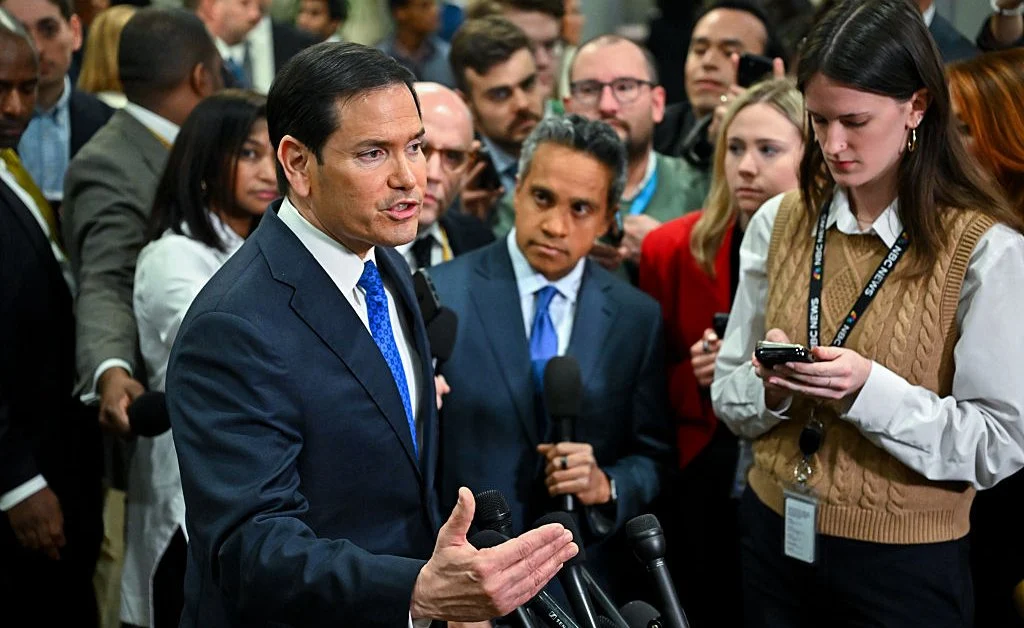
The mixed messages have left lawmakers struggling to discern the precise legal and strategic basis for the war. Senator Angus King, an independent from Maine who caucuses with the Democrats, told TIME on Tuesday after the briefing that he was "disturbed" by Secretary of State Marco Rubio's comments. "The implication is that we're delegating the decision of whether this country goes to war to another country," he said. "That's a breathtaking assertion. When I woke up to the news Saturday morning, my first question was, why now? And the original justifications given was the nuclear threat and those kinds of things—all of them have just sort of fallen by the wayside. I think [Israel] was the precipitating factor, and I think that's inappropriate."
**Congressional Intervention**
Under U.S. law, the President may use military force without congressional authorization only in response to a direct, imminent threat. A strike to prevent future retaliation triggered by an ally's action presents a less clear case that some in Congress believe proves Trump ignored Congress' constitutional authority on the matter. In recent days, Administration officials have also cited Iran's advancing nuclear capabilities, ballistic missile production, and the possibility that it would soon acquire long-range strike capacity as the reasons for the strikes. Trump himself had previously asserted that Iran was going to be able to threaten the United States directly "soon," despite American intelligence assessments casting doubt on such scenarios.
**The Policy Debate**
The Congressional debate surrounding the war is set to intensify, with lawmakers from both parties signaling that the U.S.-Israeli military operations in Iran will increase in the coming days. Senator Chris Murphy, a Connecticut Democrat, told reporters as he left the briefing that he was more convinced now that the war will be open-ended and forever. "They told us in that room that there are gonna be more Americans that are gonna die, that they're not gonna be able to stop these drones. We have to have a debate in the U.S. Senate on an authorization of military."
**A War of Uncertainty**
The mixed messages and conflicting rationales have left the public questioning the Administration's justification for the war. As lawmakers grapple with the implications of a war based on uncertainty, it remains unclear what the future of U.S.-Iran relations holds. What is certain, however, is that the war will have far-reaching consequences, both domestically and internationally.
**What Comes Next**
As the debate surrounding the war intensifies, one thing is clear: the U.S. is at a turning point in its relations with Iran. The Administration's conflicting rationales and the Congressional debate surrounding the war will continue to dominate the headlines in the coming days. As lawmakers grapple with the implications of a war based on uncertainty, it remains to be seen what the future of U.S.-Iran relations holds.
[https://time.com/7382322/trump-iran-war-progress-knocked-out-reason-for-strikes/]
[https://time.com/7381896/trump-attack-iran-why-now-factors/]
