

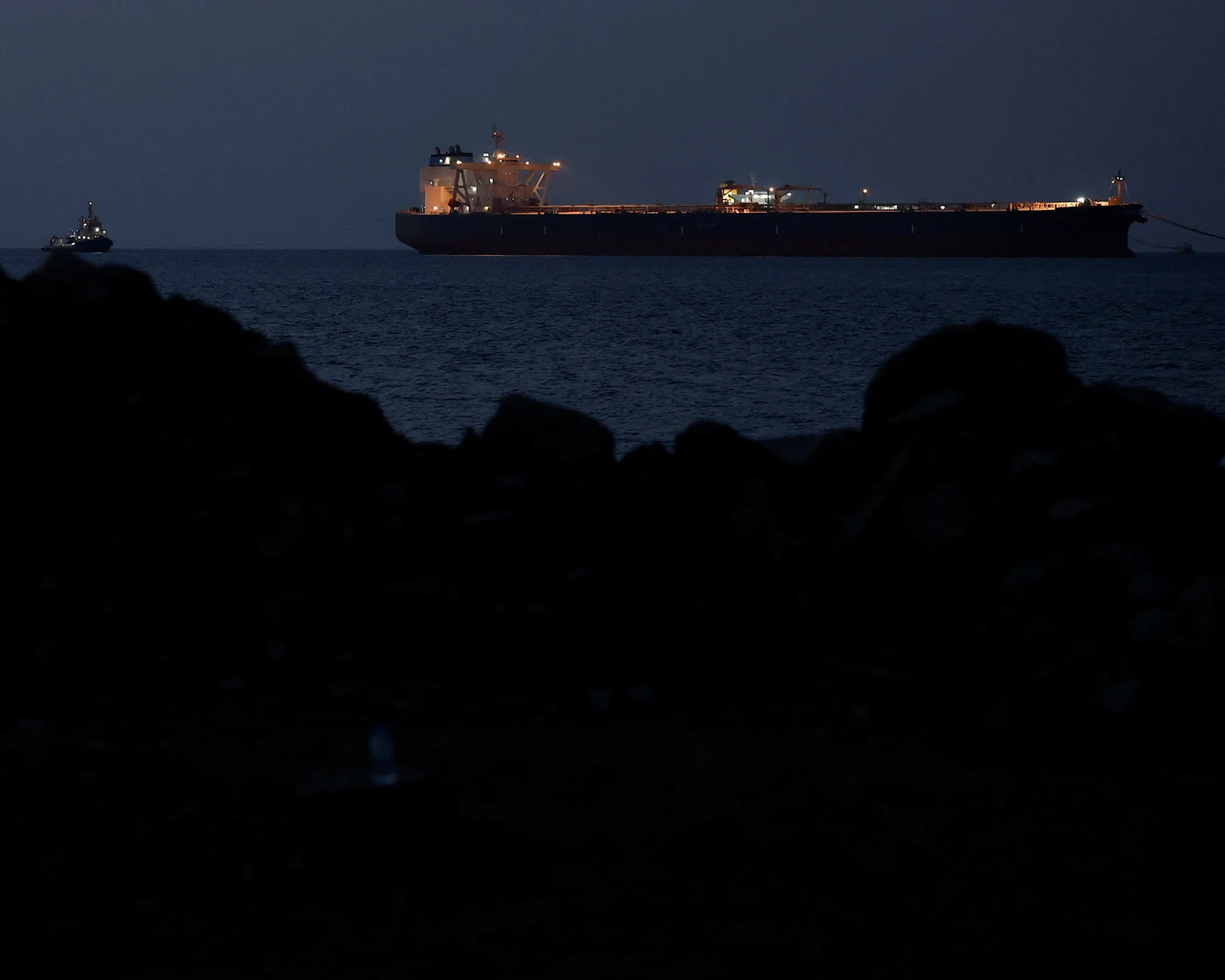
The Strait of Hormuz, a critical waterway for global energy supplies, remains largely impassable for international shipping, despite US President Donald Trump's announcement of a $20bn reinsurance scheme to revive shipping through the strait. As reported by The Guardian, only two vessels not linked to Iran or Russia have braved the "chicken run" since Trump's promise on Friday.
Maritime records show that one of these vessels, the Shenlong, a Chinese-made vessel operated by Greece's Dynacom Tankers Management, crossed the narrow strait to exit the Gulf on Friday, switching off its transponder as it approached the strait and then began signalling again near India's coastline on Monday. A second vessel, the Sino Ocean, a bulk carrier that also sails under a Liberian flag, signalled it was "CHINA OWNER_ALL CREW" as it traversed the strait after picking up its cargo from the United Arab Emirates' Mina Saqr port on Thursday.
The Hormuz sea passage, which normally sees around 100 vessels a day either exiting or entering the Gulf, has been effectively shut by Iran in response to the US and Israeli attacks, with at least 10 ships attacked in the early days of the crisis. Trump's reinsurance scheme, announced on Friday, aims to provide cover for shipowners, but so far, only a small number of tankers and bulk carriers have braved the crossing, using various methods to mitigate the risk.
Shipping Industry Response
Matthew Wright, the lead freight analyst at Kpler, notes that the high freight rates that companies can charge mean that insurance premiums are not the main problem. "Even record-high freight rates have failed to break the deadlock," he said. "Shipowners are primarily concerned with the risk of missile or drone attacks, and until there is a material improvement in the security environment, flows are likely to remain extremely limited."
Wright suggests that a diplomatic solution would be the most effective way to restore shipping flows, with China potentially playing a key role in negotiations. However, he also warns that if Iran adopts a more decentralised warfare approach, similar to that used by the Houthis, the conflict could drag on for months, with significant implications for global energy supplies.
Meanwhile, finance ministers of the G7 nations have announced that they are ready to take "necessary measures" to support the global supply of energy, but have yet to agree on the release of strategic crude reserves. If such reserves were released, it would be the first time since 2022, following Russia's full-scale invasion of Ukraine.
Global Energy Implications
The Strait of Hormuz is a critical chokepoint for global energy supplies, with around 20% of the world's petroleum consumption and roughly one-fifth of the world's liquefied natural gas passing through the strait each day. The disruption to shipping has already had a significant impact on oil prices, which jumped to as high as $119 a barrel on Monday, before dropping below $90 after Trump suggested that the war with Iran could end "very soon".
As the situation continues to unfold, it remains to be seen whether Trump's reinsurance scheme will be enough to revive shipping through the Strait of Hormuz, or whether a more comprehensive solution will be required to restore stability to the region and ensure the free flow of energy to the world.
Expert Analysis
Experts warn that the situation in the Strait of Hormuz is complex and multifaceted, with a range of factors at play. The international community will be watching closely as events unfold, with significant implications for global energy supplies and the broader economy.
