

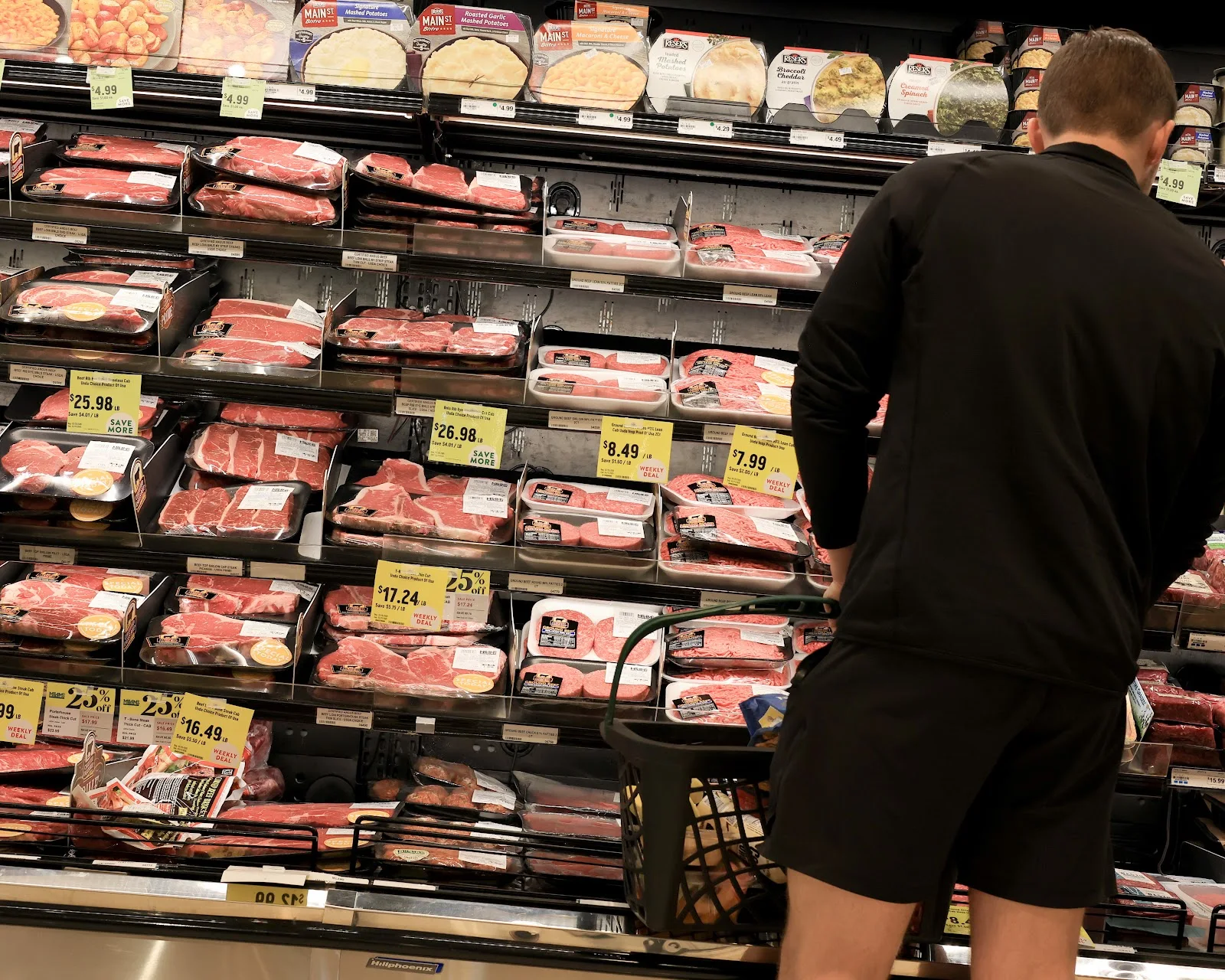
The US economy may be experiencing a period of growth, but for many Americans, the cost of living remains a significant challenge. As reported by The Guardian, workers across the country are struggling to afford basic necessities, despite President Donald Trump's claims that the economy is 'roaring back'. The Guardian spoke to several workers, including Dawn Levie, a 61-year-old postal service worker in Paulden, Arizona, who has seen her earnings decline over the past year due to cuts to her hours.
Levie's story is not unique, as many workers are finding it difficult to make ends meet. Bryan Williams, a 63-year-old home-care worker in Madison, Wisconsin, is living paycheck to paycheck on $17.65 an hour. 'I know things are worse, because I'm living it and I feel it every day,' Williams said. 'It's very hard trying to pay rent, pay your bills, buy food, gas and juggle which ones you can pay [and] which ones you can let go.'
Vernice Thompson, a 63-year-old retail worker in Williamsburg, Virginia, also struggles to afford the basics. Despite receiving social security benefits, housing takes up half her income. 'Groceries have gone up. [The prices of] a lot of the foods that I like have gone up,' Thompson said. 'I know the price of clothing too because I work in retail, and I haven't seen any declines in the price of clothing.' 'Everything is going up,' she added.
Food and Utility Prices on the Rise
Food prices were 2.9% higher in January compared to the year before and are predicted to increase by 3.1% over the next year. The food insecurity rate spiked to 16% in November, up from 12.7% in January 2025. Utility prices in the US also increased by more than 6% in January 2026 compared to a year prior.
These price increases have led to a surge in debt for many Americans. Total household debt in the fourth quarter of 2025 reached $18.8tn, up by 4% since the beginning of the year. Delinquency for all types of debt rose 3.26% in the fourth quarter of 2025 compared to 1.7% in the same period of 2024. Credit card debt in the US by the end of 2025 hit a record $1.28tn.
Stagnant Wages and Declining Affordability
Meanwhile, wages have stagnated for many workers. The 10% lowest wage earners, receiving on average $14.56 an hour, saw their wages decline by 0.3% when adjusted for inflation in 2025. The federal minimum wage of $7.25 an hour has remained unchanged since 2009 – the longest period without an increase since the federal minimum wage was enacted.
Crystal Franklin, a 54-year-old US passport specialist and mother of three, has felt the impact of stagnant wages. She started taking the bus to work because of rising gas prices and is being more frugal at the grocery store. Yet she still has less room in her budget for entertainment and leisure expenses for her grandchildren. 'We're not able to do what we used to be able to do because cost of living has gone up extremely high,' Franklin said.
Trump Administration's Policies and Their Impact
The Trump administration's policies have also contributed to the affordability crisis. The administration's tariffs have led to higher prices, with seven out of 10 Americans saying that tariffs have resulted in higher prices. US families have paid more than $1,700 in estimated costs due to the Trump administration's tariffs from February 2025 to January 2026.
In addition to these costs, the White House is allowing Affordable Care Act subsidies to expire, which will raise health insurance premiums for 22 million Americans by an estimated 114% from $888 a year to $1,904 in 2026. Trump has also sought to cut pay for millions of low-wage workers, including rescinding an executive order that raised the minimum wage for federal contractors to $15 an hour.
Expert Analysis and Response
A spokesperson for the White House, Kush Desai, disputed the economic trajectory under the Trump administration. 'America's economic trajectory under President Trump has been solid,' Desai said. However, many experts disagree, citing the data on stagnant wages, rising debt, and declining affordability.
As the US economy continues to grow, it is clear that many Americans are still struggling to make ends meet. The affordability crisis is a complex issue, with many factors contributing to its persistence. As the country moves forward, it is essential to address the root causes of this crisis and work towards creating a more equitable and sustainable economy for all.
