

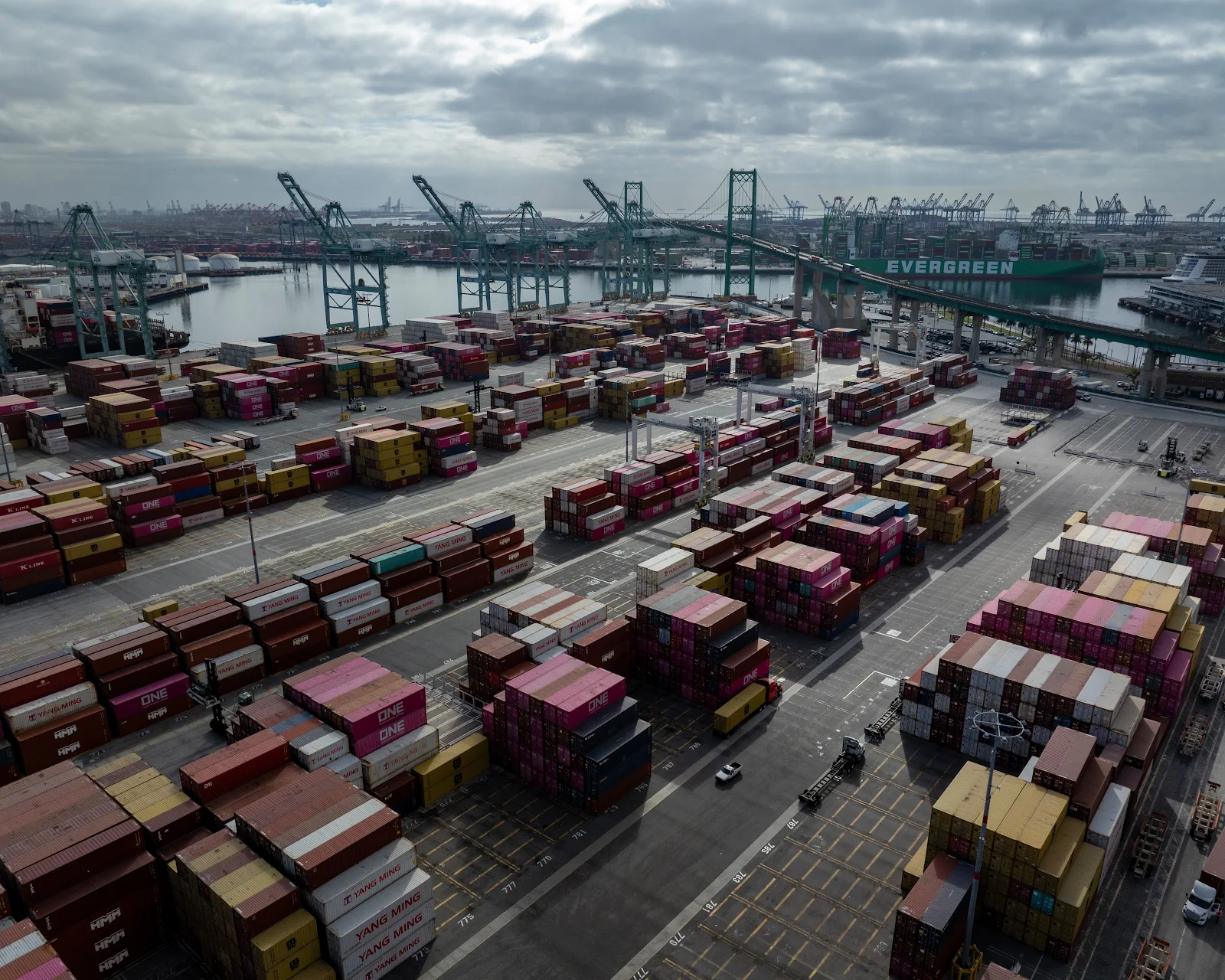
The economic implications of Donald Trump's tariffs have been a subject of intense debate, with the White House maintaining that they are necessary to protect American industries and create jobs. However, a recent survey conducted by the Harris Poll for The Guardian suggests that the negative economic impacts of these tariffs are being felt across party lines, with seven in ten Americans saying they have led to higher prices.
The survey's findings present a significant challenge for Republicans in the upcoming midterm elections, as the majority of voters, including 60% of Republicans, believe that Trump's tariffs have had a negative impact on consumers. According to the survey, 64% of Republicans agreed that Trump's tariffs had led to higher prices, compared to 77% of Democrats and 67% of independents who believed the same.
Americans are experiencing the most significant price increases at the grocery store, with 57% saying that tariffs have negatively affected grocery prices. This is in line with recent economic data, which showed that grocery prices increased by 3.1% from February 2025 to February 2026, outpacing the overall pace of inflation. The prices of beef and coffee, two food industries highly affected by tariffs, have seen huge increases, rising by 14% and 18%, respectively, since last year.
Tariffs and the Economy
The survey's findings also highlight a clear partisan divide on the issue of tariffs, with 81% of Democrats and 68% of independents agreeing that tariffs are not the right solution for the economy, compared to 53% of Republicans who said the same. Republicans are also more optimistic about the economy overall, with nearly half (49%) of Republican respondents saying they believed the economy is getting better, while just 18% of Democrats and independents said the same.
Conservatives are also more patient about Trump's tariffs, with 80% saying they were open to seeing whether tariffs could positively affect the economy in 2026, compared to 46% of Democrats and 53% of independents. A clear majority of Republicans (69%) said that tariffs had brought back manufacturing jobs, while 46% of Democrats and 38% of independents believed that manufacturing jobs won't ever come back.
The split in opinion on tariffs may pose a challenge for Republicans in the midterm elections, as they try to convince independent swing voters that their party has been attuned to the rising costs of living, despite the clear negative sentiment around tariffs. When Trump won his re-election in 2024, a small but critical mass of independent-leaning voters showed up for him at the voting booth, and Trump had spent much of his campaign bashing Joe Biden and Kamala Harris for their record on inflation and promised to turn the economy around.
The Tariff Legacy
Trump has been firm in his support for tariffs, calling them the "most beautiful" word in the dictionary. Even though inflation and unemployment were at their lowest levels last spring, Trump enthusiastically announced a historic slate of tariffs, slapping levies on virtually every import that came into the country. Many of these tariffs have been rolled back or struck down by a recent supreme court ruling, but Trump has vowed to keep tariffs in place.
In a Wall Street Journal op-ed published in January, Trump wrote, "It was the tariff that made America strong and powerful in generations past, and it is tariffs that are making our country stronger, safer, and richer than ever before." Since February, Trump has announced a new 15% global baseline tariff that he plans to put in place, which can only last for a maximum of 150 days due to the court's ruling.
The White House has also announced that it had opened trade investigations into foreign countries, a process that could lead to even more new tariffs. The survey was conducted online within the US by the Harris Poll from 26-28 February 2026, among a nationally representative sample of 2,138 US adults, providing a snapshot of the economic concerns and opinions of Americans in the lead-up to the midterm elections.
