

Hours before the sun set on his Florida golf club, President Donald Trump was still speaking to CBS News, painting a picture of a war with Iran that was all but over. "I think the war is very complete, pretty much," he said, echoing the confidence of a leader who had grown accustomed to declaring victory.
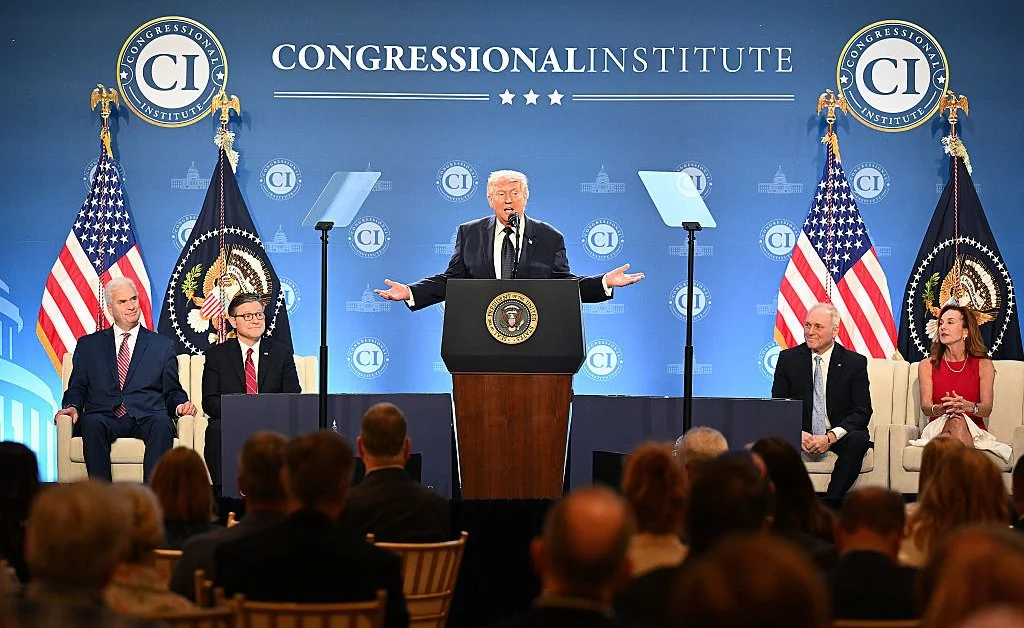
Yet just 24 hours later, a different Trump emerged, addressing Republican lawmakers in a House policy retreat in Florida. The tone was more measured, the language more somber. "We've already won in many ways, but we haven't won enough," he told the crowd, as they applauded his determination.
A Shifting Narrative
The mixed signals from the President underscored the uncertain trajectory of a conflict that has expanded rapidly across the Middle East, raising fears in Washington that it could deepen into a longer and deadlier war. The war with Iran, which began just over a week ago, has already produced a widening humanitarian and economic toll, with over 1,300 people killed in strikes inside the country and hundreds of thousands displaced across the region.
At the heart of the conflict is the U.S. and Israeli military campaign against Iran's military infrastructure, with the two nations claiming to have crippled much of Iran's military capabilities. The U.S. has targeted key sites, including an airbase near Tehran and several drone and missile production facilities.
Yet, according to Trump, the war is nearing its end, with much of Iran's military being "utterly demolished." "Iran's drone and missile capability is being utterly demolished," he said in an earlier phone interview with CBS News. "The Navy is gone. It's all lying at the bottom of the ocean. 46 ships. Can you believe it?"
Inside the Community
Aware of the conflicting signals from the President, those on the front lines are bracing for a long and difficult campaign. As Iranian officials announced that Mojtaba Khamenei, the son of the slain supreme leader Ayatollah Ali Khamenei, would assume the position, Trump vowed to press forward, describing the war as unfinished and pledging continued military pressure.
"Now nobody has any idea who the people are that are going to be the head of the country," Trump said, adding that the U.S. would not relent until Iran's leadership and military apparatus were fully defeated. "And we will not relent until the enemy is totally and decisively defeated."
The Policy Debate
The conflicting signals also highlight the deep divisions within the Administration on the goals and duration of the war. Earlier, senior officials had offered shifting explanations for the initial strikes, citing Iran's nuclear ambitions, the need to protect American troops and allies in the region, or pointing to Israel's own military plans.
As the Defense Department posted a message on social media declaring, "We have only just begun to fight," the Administration's struggle to define the war's goals and duration reflects the uncertain trajectory of the conflict. With humanitarian and economic tolls already mounting, the question remains: what will ultimately define the endgame in Iran?
