

**War's Uncharted Path**
In the midst of escalating tensions with Iran, President Donald Trump's words on the war's trajectory have left the world questioning its endgame. The conflict, now into its second week, has seen the destruction of Iranian military infrastructure and the loss of life on both sides.
As reported by TIME, Trump signaled that the war could be nearing its end, declaring American and Israeli forces had crippled much of Iran's military capabilities, even as he simultaneously vowed that the United States would press forward until the country's leadership was decisively defeated. This mixed message underscored the uncertain trajectory of a conflict that has expanded rapidly across the Middle East.
The President's words were first expressed in a phone interview with CBS News on Monday afternoon, where Trump portrayed the war on Iran as nearly finished. "I think the war is very complete, pretty much," the President said from his golf club in Doral, Fla., arguing that Iran's military capabilities had been largely destroyed after a wave of strikes by the United States and Israel. "If you look, they have nothing left. There's nothing left in a military sense."
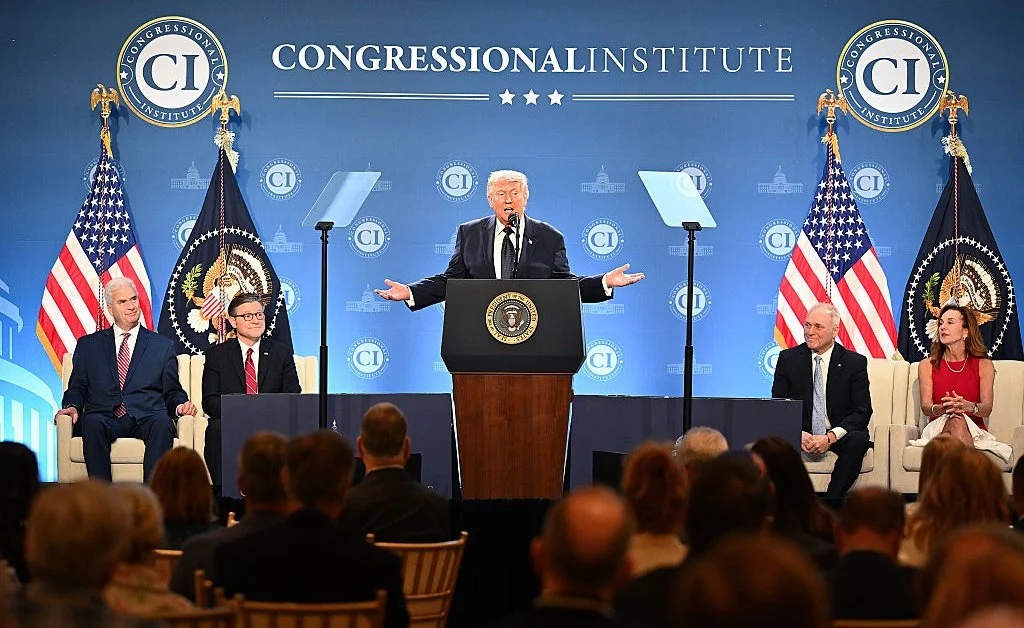
However, just hours later, speaking to Republican lawmakers gathered for a House policy retreat in Florida, Trump struck a very different tone, describing the war as unfinished and pledging continued military pressure. "We've already won in many ways, but we haven't won enough," Trump told the crowd, which responded with applause. "We go forward more determined than ever to achieve ultimate victory that will end this long-running danger once and for all."
**A War Without Clear Goals**
The President's conflicting statements reflect an Administration still struggling to define both the goals and the expected duration of a war now days into its second week. Since the conflict began, senior officials have offered a series of shifting explanations for the initial strikes on Iran—at times emphasizing Iran's nuclear ambitions, at other moments citing the need to protect American troops and allies in the region, or pointing to Israel's own military plans.
Secretary of State Marco Rubio initially suggested that the United States moved in part because Israel was preparing its own attack and might have triggered retaliation against American forces. Trump later rejected that framing, saying he believed Iran itself was preparing to strike first and that he might have "forced Israel's hand." This confusion has raised questions about the war's objectives and the long-term implications for the region.
**Humanitarian Toll Mounts**
The war has already produced a widening humanitarian and economic toll across the region. The Iranian Red Crescent Society has said roughly 1,300 people have been killed in strikes inside the country, while Iranian attacks across the Middle East have killed more than 30 people. Israeli strikes have also expanded into Lebanon, killing nearly 500 people, according to the Lebanese officials, and displacing hundreds of thousands of civilians.
As the conflict continues, it remains unclear how long it will last and what the ultimate outcome will be. The humanitarian crisis in the region is deepening, and the world waits with bated breath for a resolution that could bring an end to the suffering.
**A Safer World in Sight?**
Despite the uncertainty surrounding the war's trajectory, President Trump remains optimistic. "We're going to have a much safer world as soon as it's finished," Trump said Monday. "It's going to be finished pretty quickly." However, this prediction stands in contrast with signals from the Pentagon that the campaign may only be beginning. As the war rages on, TIME will continue to provide updates and analysis on this complex and ever-evolving conflict.
