

**The Baffling Signals of War**
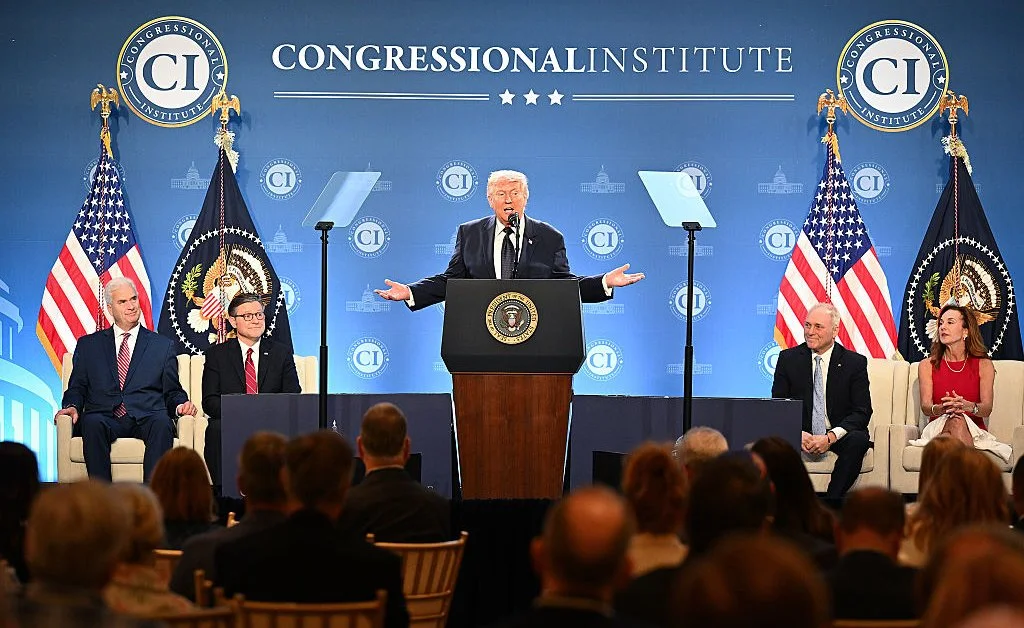
As President Donald Trump addressed the war in Iran on Monday, the nation was left scratching its collective head. During a phone interview with CBS News, Trump suggested that the war was "nearly finished," stating, "I think the war is very complete, pretty much." Meanwhile, just hours later, speaking to Republican lawmakers in Florida, Trump struck a very different tone, declaring, "We’ve already won in many ways, but we haven’t won enough." The mixed signals from the President underscored the uncertain trajectory of a conflict that has expanded rapidly across the Middle East and raised fears in Washington that it could deepen into a longer and deadlier war.
The mixed signals from Trump were just the latest in a series of confusing messages from the Administration regarding the goals and expected duration of the war. Since the conflict began, senior officials have offered shifting explanations for the initial strikes on Iran, at times emphasizing Iran's nuclear ambitions, citing the need to protect American troops and allies in the region, or pointing to Israel's own military plans.
"I think the war is very complete, pretty much," Trump told CBS News, arguing that Iran's military capabilities had been largely destroyed after a wave of strikes by the United States and Israel. "If you look, they have nothing left. There's nothing left in a military sense." The President echoed similar sentiments at a press conference later on Monday, saying, "We’re achieving major strides toward completing our military objective, and some people could say they’re pretty well complete."
However, the Pentagon has sent a different message, with the Defense Department posting a message on social media declaring, "We have only just begun to fight." The comments reflected an Administration still struggling to define both the goals and the expected duration of a war now days into its second week.
As the war rages on, the humanitarian and economic toll across the region continues to widen. The Iranian Red Crescent Society has said roughly 1,300 people have been killed in strikes inside the country, while Iranian attacks across the Middle East have killed more than 30 people. Israeli strikes have also expanded into Lebanon, killing nearly 500 people, according to the Lebanese officials, and displacing hundreds of thousands of civilians.
"We're going to have a much safer world as soon as it's finished," Trump said Monday. "It's going to be finished pretty quickly." The President's comments came as the United States continued to impose stricter sanctions on Iran, aiming to cripple the country's economy and military capabilities.
The mixed signals from Trump have left many in Washington wondering what exactly the Administration's strategy is in the Middle East. "We've already won in many ways, but we haven’t won enough," the President told the Republican lawmakers. But how can that be the case when the war is "nearly finished," as Trump suggested earlier in the day?
**The Shifting Goals of War**
The Administration's shifting explanations for the war in Iran have raised questions about the true goals of the conflict. At times, officials have emphasized the need to protect American troops and allies in the region, while at other moments they have pointed to Israel's own military plans.
"We've done what we've done because Israel's been preparing to strike and might have been caught off guard with a surprise attack," Secretary of State Marco Rubio said earlier this week. However, Trump later rejected that framing, saying he believed Iran itself was preparing to strike first and that he might have "forced Israel's hand."
As the war continues to unfold, it remains unclear what exactly the Administration's strategy is in the Middle East. The mixed signals from Trump have left many wondering what the true goals of the conflict are.
**A Widening Humanitarian and Economic Toll**
The war in Iran has already produced a widening humanitarian and economic toll across the region. The Iranian Red Crescent Society has said roughly 1,300 people have been killed in strikes inside the country, while Iranian attacks across the Middle East have killed more than 30 people.
Israeli strikes have also expanded into Lebanon, killing nearly 500 people, according to the Lebanese officials, and displacing hundreds of thousands of civilians. The conflict has resulted in a massive humanitarian crisis, with many in the region left without access to basic necessities like food, water, and shelter.
**The Unsettling Silence of the Opposition**
As the war rages on, there has been an unsettling silence from the opposition. Many lawmakers have spoken out against the conflict, but their voices have been largely drowned out by the din of war.
"We must be honest with the American people about the true nature of this conflict," said Senator Elizabeth Warren, who has been a vocal critic of the war. "We must not let the President's mixed signals lead us down a path of further destabilization and chaos in the Middle East."
For now, it remains unclear what the future holds for the war in Iran. One thing is certain, however: the mixed signals from Trump have left the nation in a state of uncertainty.
---
This article is based on the following TIME Magazine article:
https://time.com/7382697/trump-iran-war/
https://www.cbsnews.com/news/trump-iran-cbs-news-the-war-is-very-complete-strait-hormuz/
https://time.com/7383138/mojtaba-khamenei-supreme-leader-iran/
https://time.com/7383160/trump-comments-about-new-iran-supreme-leader-mojtaba-khamenei/
https://time.com/7383138/mojtaba-khamenei-supreme-leader-iran/
