

**A Nation Divided: Trump's Wartime Waffling Leaves Americans Asking: What's Next?**
As President Donald Trump sat down for a phone interview with CBS News on Monday afternoon, he presented a picture of a war with Iran that was all but over. "I think the war is very complete, pretty much," he said from his golf club in Doral, Florida, citing the destruction of Iran's military capabilities after a wave of strikes by the United States and Israel. "If you look, they have nothing left. There's nothing left in a military sense."
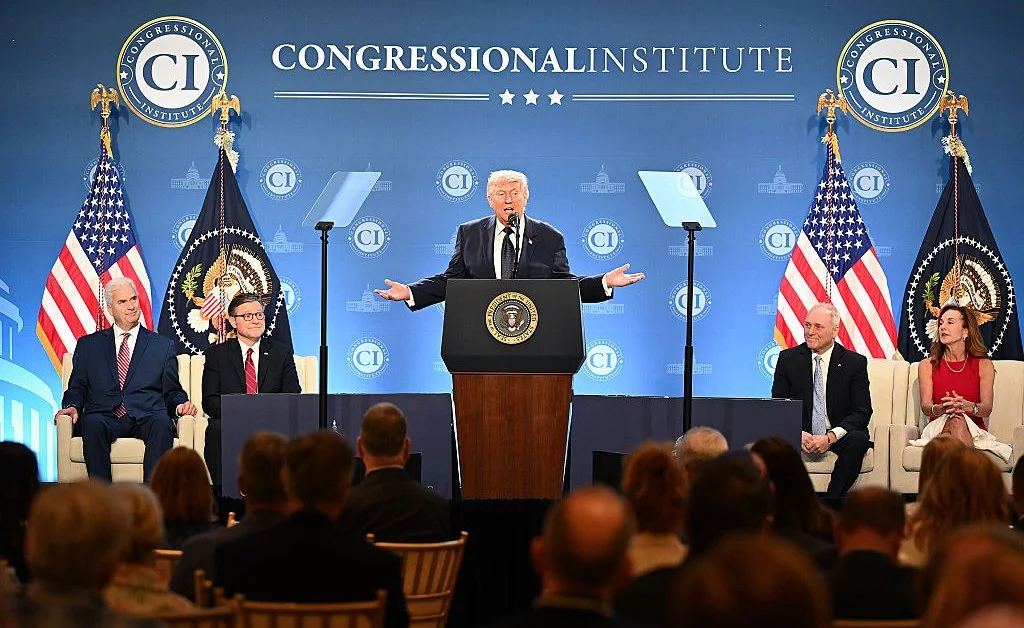
But just hours later, speaking to Republican lawmakers in the same state, Trump struck a very different tone. "We've already won in many ways, but we haven't won enough," he declared. "We go forward more determined than ever to achieve ultimate victory that will end this long-running danger once and for all." This apparent shift in strategy has left Americans scratching their heads, wondering what exactly is driving the President's decisions and when – or if – the war with Iran will ever truly end.
**The Broader Shift: A Conflict Without a Clear Endgame**
The conflict with Iran has been a defining feature of Trump's presidency, one that has expanded rapidly across the Middle East and raised fears in Washington that it could deepen into a longer and deadlier war. Since the conflict began, senior officials have offered a series of shifting explanations for the initial strikes on Iran – at times emphasizing Iran's nuclear ambitions, at other moments citing the need to protect American troops and allies in the region, or pointing to Israel's own military plans.
One thing is clear: the war has already produced a widening humanitarian and economic toll across the region. The Iranian Red Crescent Society has said roughly 1,300 people have been killed in strikes inside the country, while Iranian attacks across the Middle East have killed more than 30 people. Israeli strikes have also expanded into Lebanon, killing nearly 500 people, according to the Lebanese officials, and displacing hundreds of thousands of civilians.
**The Administration's Internal Conflict**
The mixed signals from the President have underscored the uncertain trajectory of a conflict that has left many in Washington searching for answers. "We have only just begun to fight," the Defense Department posted on social media on Monday – a stark contrast to Trump's assertions that the war could soon be finished.
Secretary of State Marco Rubio has been a vocal advocate for a more nuanced approach to the conflict, suggesting that the United States moved in part because Israel was preparing its own attack and might have triggered retaliation against American forces. But Trump has rejected this framing, saying he believed Iran itself was preparing to strike first and that he might have "forced Israel's hand."
**What Workers Are Facing: The Human Cost of War**
The war has already taken a devastating toll on ordinary people, who are caught in the middle of a conflict that seems to be spiraling out of control. "We're going to have a much safer world as soon as it's finished," Trump said Monday. "It's going to be finished pretty quickly." But for those on the ground, the reality is far bleaker – with displacement, devastation, and loss of life mounting by the day.
**The Policy Debate: What's Next for the United States?**
As the conflict continues to unfold, the United States finds itself at a crossroads – unsure of what its true objectives are or how long this war will last. The Administration's internal conflict is only adding to the uncertainty, with some officials pushing for a more measured approach and others advocating for a more aggressive stance.
The question on everyone's mind is: when will this war finally come to an end? And what will be the cost to Americans, both at home and abroad, when it does? Only time will tell.
