**The Shifting Frontlines: A War in Flux**
In a phone interview with CBS News, President Donald Trump revealed a glimmer of hope for the end of the war with Iran, suggesting that American and Israeli forces had already crippled much of Iran's military infrastructure. However, this optimism was quickly undercut by the President's own words, as he vowed to press forward until Iran's leadership was decisively defeated. This mixed message underscores the uncertain trajectory of a conflict that has expanded rapidly across the Middle East, raising fears in Washington that it could deepen into a longer and deadlier war.
As the war with Iran enters its second week, the Trump Administration is struggling to define both the goals and the expected duration of the conflict. Since the initial strikes on Iran, senior officials have offered a series of shifting explanations, from emphasizing Iran's nuclear ambitions to citing the need to protect American troops and allies in the region. This confusion has created uncertainty both at home and abroad, where the humanitarian and economic toll of the war is already beginning to mount.
The Iranian Red Crescent Society has said roughly 1,300 people have been killed in strikes inside the country, while Iranian attacks across the Middle East have killed more than 30 people. Israeli strikes have also expanded into Lebanon, killing nearly 500 people, according to Lebanese officials, and displacing hundreds of thousands of civilians. Amidst this chaos, President Trump remains resolute in his commitment to defeating Iran, declaring, "We're going to have a much safer world as soon as it's finished. It's going to be finished pretty quickly."
A Changing Landscape
In recent days, the conflict has taken on a more complex and fluid nature, with both sides engaging in a war of words as much as a war of missiles. The Trump Administration's stance on the conflict has been characterized by a mix of optimism and caution, with the President often contradicting his own statements and those of his officials. This has created confusion not only about the goals of the war but also about its expected duration.
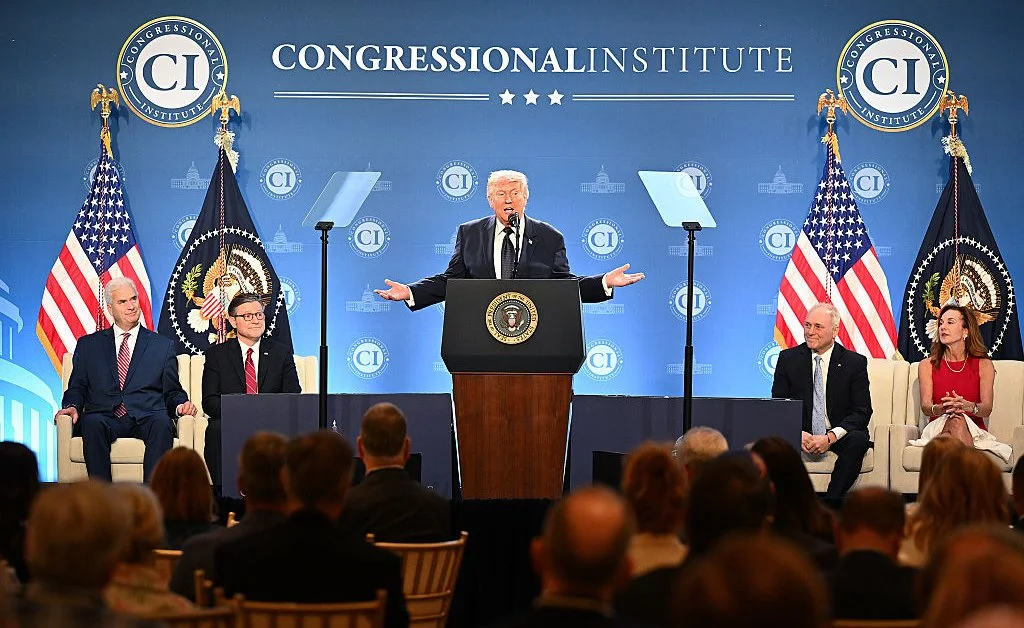
In a phone interview with CBS News on Monday afternoon, Trump portrayed the war on Iran as nearly finished, stating, "I think the war is very complete, pretty much." He argued that Iran's military capabilities had been largely destroyed after a wave of strikes by the United States and Israel. "If you look, they have nothing left. There's nothing left in a military sense." However, hours later, speaking to Republican lawmakers gathered for a House policy retreat in Florida, Trump struck a very different tone, describing the war as unfinished and pledging continued military pressure.
Inside the Community
The humanitarian and economic toll of the war is already beginning to mount, with widespread displacement and civilian casualties reported across the region. The Iranian Red Crescent Society has said roughly 1,300 people have been killed in strikes inside the country, while Iranian attacks across the Middle East have killed more than 30 people. Israeli strikes have also expanded into Lebanon, killing nearly 500 people, according to Lebanese officials, and displacing hundreds of thousands of civilians.
In a recent press conference, Trump added to the uncertainty surrounding the conflict, saying that the United States would not stop until Iran's leadership and military apparatus were fully defeated. "Now nobody has any idea who the people are that are going to be the head of the country," Trump said, after Iran announced that Mojtaba Khamenei, the son of the slain supreme leader Ayatollah Ali Khamenei, would assume the position. "And we will not relent until the enemy is totally and decisively defeated."
The Policy Debate
The conflict in Iran has sparked a heated policy debate in Washington, with some lawmakers and experts calling for a more measured approach. The war has already produced a widening humanitarian and economic toll across the region, and the Trump Administration's continued commitment to military action has raised fears that the conflict could deepen into a longer and deadlier war.
In recent days, the Defense Department has posted a message on social media declaring, "We have only just begun to fight." This statement has been seen by some as a sign that the war may only be beginning, rather than nearing its end. The uncertainty surrounding the conflict has created challenges for policymakers, who must balance competing demands for military action with the need to protect civilians and avoid escalating the conflict.
As the war with Iran enters a critical phase, the Trump Administration's resolve will be tested by the complexities and uncertainties of the conflict. The fate of the war, and the region, hangs in the balance, as the United States and its allies continue to engage in a conflict that is as much a test of military might as it is a test of diplomatic will.

