

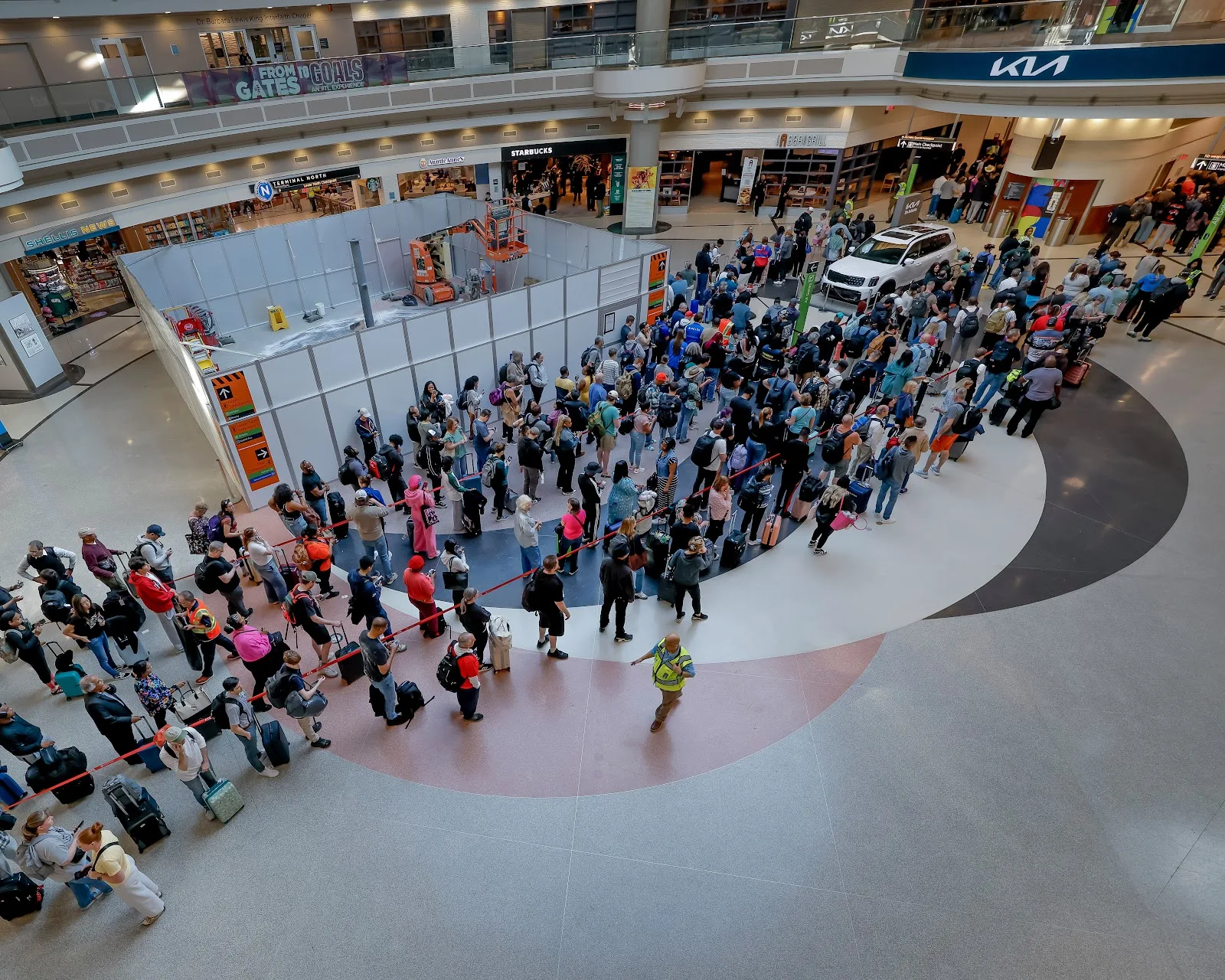
The ongoing Department of Homeland Security (DHS) shutdown has left Transportation Security Administration (TSA) workers reeling, with many entering their sixth week without pay. As reported by The Guardian, the situation has been further complicated by the White House's deployment of Immigration and Customs Enforcement (ICE) officers to airports. This move has been met with criticism from the American Federation of Government Employees (AFGE), which represents TSA workers.
According to AFGE President Everett Kelley, ICE agents are not trained or certified in aviation security, and their presence at security checkpoints could create more problems than it solves. Kelley emphasized that TSA officers undergo extensive training to detect explosives, weapons, and other threats, and that this expertise cannot be improvised. As Antoinette Wade, president of AFGE Local 1047, noted, the influx of ICE agents has deflated TSA workers, particularly since ICE agents continue to be paid during the shutdown.
Wade, who is also a TSA officer in Jackson, Mississippi, stated that the situation has significantly impacted morale among TSA workers. She emphasized that many workers are struggling to make ends meet, with some having to take out loans or max out credit cards to survive during the previous shutdown. With the current shutdown, workers are again facing uncertainty, and the high cost of gas and rising prices of goods have made it even more difficult for them to work unpaid.
Shutdown Impact
The shutdown has resulted in over 400 TSA workers quitting since it began, with major US airports reporting high call-out rates among workers. On Sunday, more than 3,450 TSA officers called out of work, with as many as 40% of officers at some airports calling out that day, according to DHS data. Senate Republicans are still trying to work with the White House to negotiate a deal with Democrats to reopen the DHS.
Lauren Bis, the acting DHS assistant secretary, blamed Democrats for the shutdown, stating that it has caused more than 400 TSA officers to quit and thousands to call out from work. However, Democrats in Congress have said they will not fund DHS until Republicans agree to ICE reforms, following the agency's immigration enforcement operations that resulted in the killing of two unarmed US citizens in Minnesota in January.
As the situation continues to unfold, TSA workers like Wade remain uncertain about their future. With the shutdown showing no signs of ending, workers are growing increasingly anxious about their livelihoods. As Wade noted, the shutdown feels more intense this time around, with the anxiety and stress coming quicker than during the previous shutdown.
ICE Deployment
The deployment of ICE officers to airports has been seen as a controversial move, with many questioning the agency's ability to perform the same tasks as TSA officers. According to Kelley, ICE agents are not trained to detect explosives or other threats, and their presence at security checkpoints could compromise the safety of passengers.
Despite the concerns, the White House has defended the deployment of ICE officers, stating that it will help bolster TSA efforts to keep the skies safe and minimize air travel disruptions. However, with the shutdown continuing and no end in sight, TSA workers remain in limbo, unsure of when they will be paid or when the situation will be resolved.
Future Uncertainty
As the shutdown enters its sixth week, TSA workers are facing unprecedented uncertainty. With no clear resolution in sight, workers are struggling to make ends meet, and the situation is taking a toll on their mental health. As Wade noted, the shutdown feels like a never-ending cycle of uncertainty, with workers caught in the middle of a political game.
With the situation continuing to unfold, it remains to be seen how the shutdown will be resolved and what the long-term impact will be on TSA workers. One thing is certain, however: the shutdown has highlighted the need for a more sustainable solution to the funding of the DHS and the importance of supporting the workers who keep the country's skies safe.
