

UK scientists have made a breakthrough in growing fully functioning food pipes in a lab and successfully transplanting them into mini pigs.
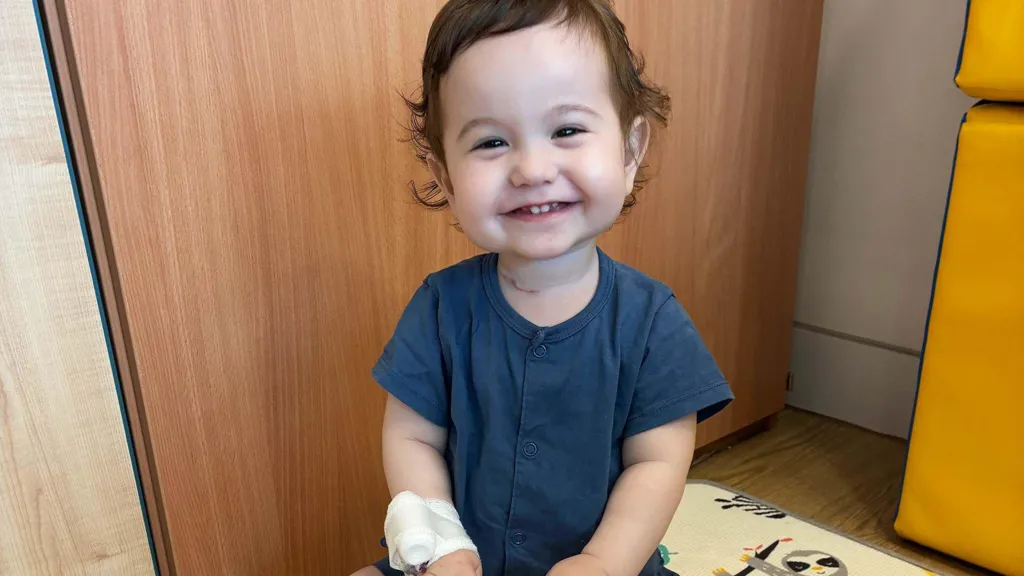
According to a report in the journal Nature Biotechnology, this achievement offers new hope to patients like two-year-old Casey Mcintyre, who was born with 11cm missing from his oesophagus.
Casey's parents, Silviya and Sean, have been caring for their son since birth, with Casey requiring extensive surgeries and currently using a feeding tube while he develops his swallowing abilities.
Background on the Condition
Around 18 babies are born each year in the UK with the same condition as Casey, and the new research shows it is possible to safely make and replace a full section of the oesophagus and restore normal function in a living being.
The scientists used Göttingen minipigs, the smallest domestic pig breed, to work with, as they are similar to human children in terms of size and cell makeup.
Research Methodology
To create new food pipes, scientists took a donor pig's oesophagus, stripped it of its cells, and added new cells to the scaffold, which was then placed in a bioreactor to grow and mature for a week.
Eight pigs had the transplants and recovered well, with five surviving to the six-month end point of the trial and their grafts having functional muscle, nerves, and blood vessels.
Expert Insights
Prof Paolo De Coppi, who led the research team at Great Ormond Street Hospital and University College London, hopes to offer the treatment to children within the next five years, stating that the graft would not be suitable for adults with other oesophageal problems.
As reported by the research team, the use of anti-rejection drugs was not needed, as the implant was grown using the animals' own cells, making this a promising development for young patients like Casey.
