

The ongoing conflict between the US, Israel, and Iran has led to significant fluctuations in oil prices, with the potential for further increases as the situation continues to unfold. As reported by The Guardian, the US-Israel campaign against Iran has imperiled oil and gas production infrastructure in the region, causing petroleum prices to spiral upward. One analyst predicts that prices at the pump might hit $3.85 per gallon on Monday.
The conflict has already had a substantial impact on oil prices, with Brent crude increasing to $106 per barrel early Monday before dipping to $103 a barrel. US crude was down to $94 by mid-morning, after briefly hitting $100 per barrel on Sunday. The average cost of regular gasoline in the US has increased by 23% in just under three weeks, from $3 per gallon on February 28 to $3.70 currently, according to Consumer Reports.
Patrick De Haan, a leading petroleum analyst, stated that the average US cost of gasoline could reach $3.80 to $3.85 per gallon, with the possibility of reaching $4 per gallon. Diesel prices could also increase, ranging from $5.05 to $5.15 per gallon countrywide. De Haan's predictions are based on the current market trends and the ongoing conflict in the region.
Regional Variations in Gas Prices
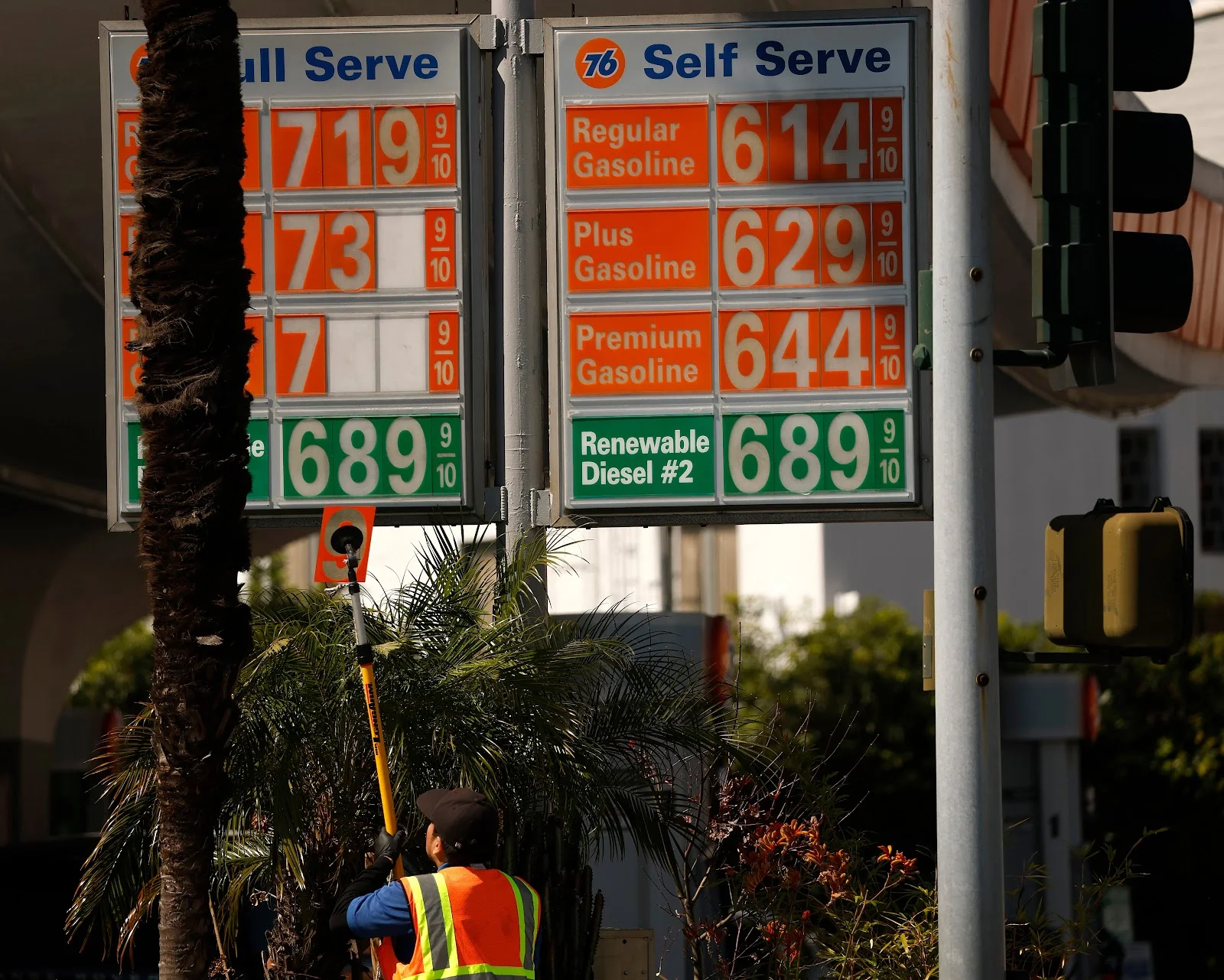
Some US regions have seen more dramatic increases in gas prices, with California averages exceeding $5 per gallon and some Los Angeles gas stations charging over $8 per gallon. These regional variations highlight the complexity of the oil market and the impact of the conflict on different parts of the country.
The fluctuating oil prices have also affected Wall Street, with stocks opening higher after news of lower oil prices. The S&P 500 was up about 1% at 11am ET, indicating a positive response to the temporary decrease in oil prices. However, top oil companies' stocks have seen minor fluctuations, with shares in top petroleum outfits reaching all-time highs overall since the conflict started.
Oil Company Executives Warn of Supply Issues
Executives from several oil companies have warned White House officials that the strait of Hormuz logjam could worsen conditions, leading to further supply issues and price increases. Darren Woods, Exxon's CEO, told officials that prices could continue to increase if there are supply issues with refined oil and gas, and that speculators could drive up prices. Conoco and Chevron's top executives have also voiced concerns about the broadening interruption.
The warnings from oil company executives highlight the potential risks and challenges associated with the ongoing conflict. As the situation continues to unfold, it is essential to monitor the developments and their impact on the oil market. The conflict has already led to significant fluctuations in oil prices, and it is likely that the market will continue to be volatile in the coming weeks.
Global Implications of the Conflict
The conflict between the US, Israel, and Iran has significant global implications, with the potential to affect not only the oil market but also the broader economy. The ongoing situation in the Middle East has already led to increased tensions and uncertainty, and it is essential to consider the potential long-term consequences of the conflict. As the situation continues to evolve, it is crucial to monitor the developments and their impact on the global economy.
