

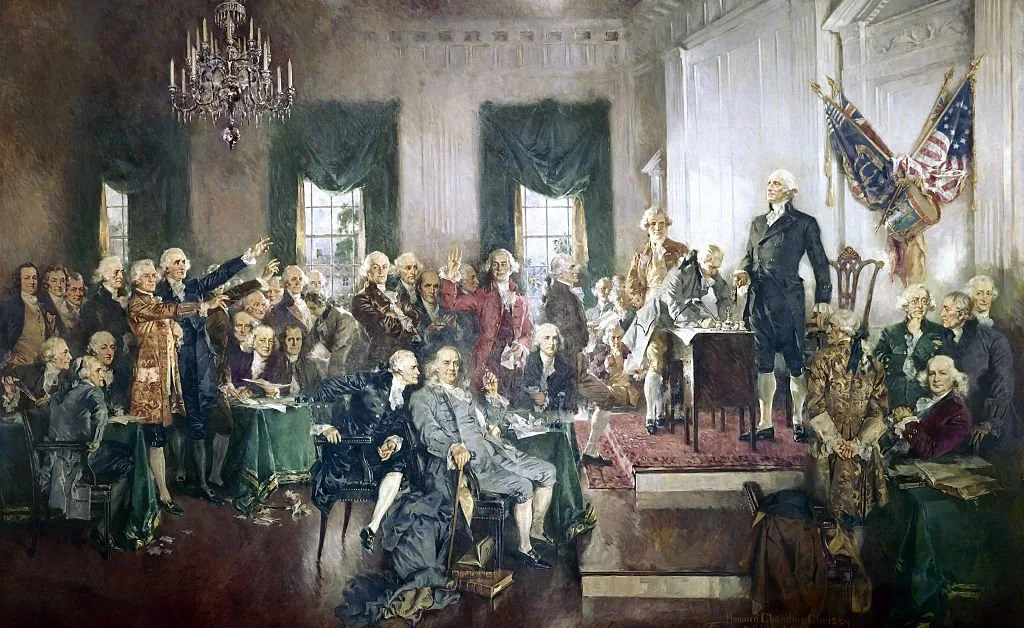
As Lindsay Chervinsky, executive director of the George Washington Presidential Library at Mount Vernon, so poignantly notes, 'It's a really good opportunity to reflect on the origins of the [presidential] office and what was intended by Washington and the other framers at the Constitutional Convention.' Chervinsky's words capture the essence of Presidents' Day, a holiday that has become synonymous with patriotism, celebration, and remembrance.
Beneath its familiar surface lies a complex history, shaped by the country's founding, its early leaders, and the evolving nature of American civic culture.
A Celebration Born of Tradition
One of the earliest federal holidays enacted by Congress, Presidents' Day honors the birthday and legacy of the first U.S. President, George Washington. Observed on the third Monday of February each year, the special day is celebrated through patriotic parades, historical reenactments, and readings of major presidential speeches, including Washington's Farewell Address.
The Uniform Monday Holiday Act of 1968, which aimed to create more three-day weekends and reduce disruptions to the workweek, shifted Washington's birthday to the third Monday of February in 1971. This decision was made to accommodate the interests of retailers, who saw an opportunity to capitalize on the long weekend.
A Legacy Reborn
Over time, the holiday has undergone significant changes, influenced by broader shifts in American society and politics. The introduction of the Uniform Monday Holiday Act marked a turning point in the perception of Presidents' Day, transforming it from a solemn tribute to Washington's birthday into a more commercialized celebration.
The association of Presidents' Day with cherry pie appears to stem from a fictional story about Washington chopping down a cherry tree as a child, which has been perpetuated through cultural narratives.
A Symbolic Legacy
The Constitution requires presidential candidates to be natural-born citizens. However, the first seven Presidents were born before 1776, when the colonies were still part of the British Empire.
Martin Van Buren, born in Kinderhook, N.Y., in 1782, became the first native-born American President and the first from New York.
A Lasting Legacy
As we continue to celebrate Presidents' Day, it is essential to remember the complexities and nuances that have shaped the holiday. Chervinsky's comment about reflecting on the origins of the presidential office and its framers at the Constitutional Convention highlights the significance of this moment in American history.
The tradition of reading Washington's Farewell Address annually serves as a reminder of the enduring legacy of the nation's founders and the importance of civic engagement and leadership.
A Reflection of the Nation
Presidents' Day serves as a reflection of the nation's values, ideals, and complexities. As Kastor notes, 'It's a really good opportunity to reflect on the origins of the [presidential] office and what was intended by Washington and the other framers at the Constitutional Convention.'
By examining the historical context and evolution of Presidents' Day, we can better understand the nation's identity and its commitment to leadership, civic engagement, and remembrance.
