

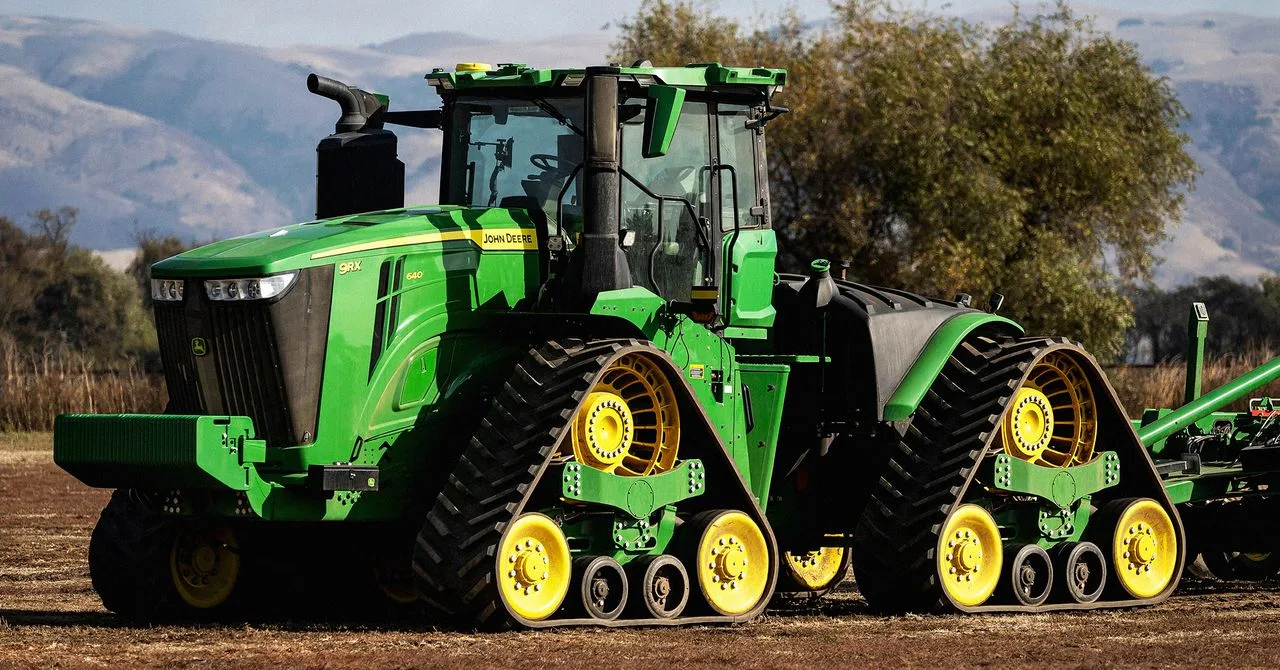
The latest battleground in the right-to-repair movement has emerged in Iowa's farm fields, where lawmakers are pushing to give farmers the freedom to repair their own agricultural equipment. As reported by the Iowa Legislature, the state House bill 751 has been renamed to House File 2709 and is set to be voted on again.
This legislation is part of a broader effort to make repair more accessible, with nearly 57 state bills supported by repair advocates across the country in 2026. Many of these bills focus on farm equipment in states like Oklahoma, Wyoming, Delaware, and West Virginia. According to Elizabeth Chamberlain, director of sustainability for the right-to-repair advocate arm of iFixit, this movement is not just limited to one region or group, but is a real concern for farmers who need to repair their equipment quickly.
The Infrastructure Question
The Iowa bill defines which agricultural equipment it covers, including tractors, trailers, combines, sprayers, balers, and other equipment used to cultivate and harvest crops. It excludes aircraft and irrigation equipment, along with jet skis and snowmobiles. Manufacturers would be required to provide owners with data, documentation, and access to embedded operating software on their tractors, including future patches and fixes, all without charging for it or requiring authorization for internet access.
The bill also limits the use of digital locks, software restrictions that prevent accessing features without manufacturer approval. This is a key point of contention, with tractor manufacturer John Deere opposing the bill and arguing that it would lead to government overreach. However, Chamberlain says that this argument is unfounded, and that the bill is necessary to give farmers the freedom to repair their own equipment.
Regulatory Pressure Builds
John Deere has a long history of opposing repair efforts and frustrating farmers who want to take more control of their equipment. The company is still fighting a lawsuit levied against it by the US Federal Trade Commission in January 2025 for “unlawful” repairability policies. Despite this, John Deere claims to support farmers' ability to repair their equipment, and points to its online repair hub as evidence of this.
However, Chamberlain says that this hub is not always in line with the reality of what farmers need to make fixes in the moment. She also notes that John Deere has made similar promises in the past, such as a memorandum of understanding with the American Farm Bureau in 2023, but has failed to follow through on them. The Iowa bill is a key test of whether John Deere will comply with right-to-repair laws, and whether the company will continue to oppose efforts to give farmers more control over their equipment.
Power and Control
The outcome of this bill will have significant implications for the right-to-repair movement, and for the balance of power between manufacturers and consumers. If the bill passes, it could set a precedent for other states to follow, and could lead to greater freedom for farmers and other consumers to repair their own equipment. On the other hand, if the bill fails, it could embolden manufacturers to continue opposing repair efforts, and could limit the ability of consumers to take control of their own devices.
