

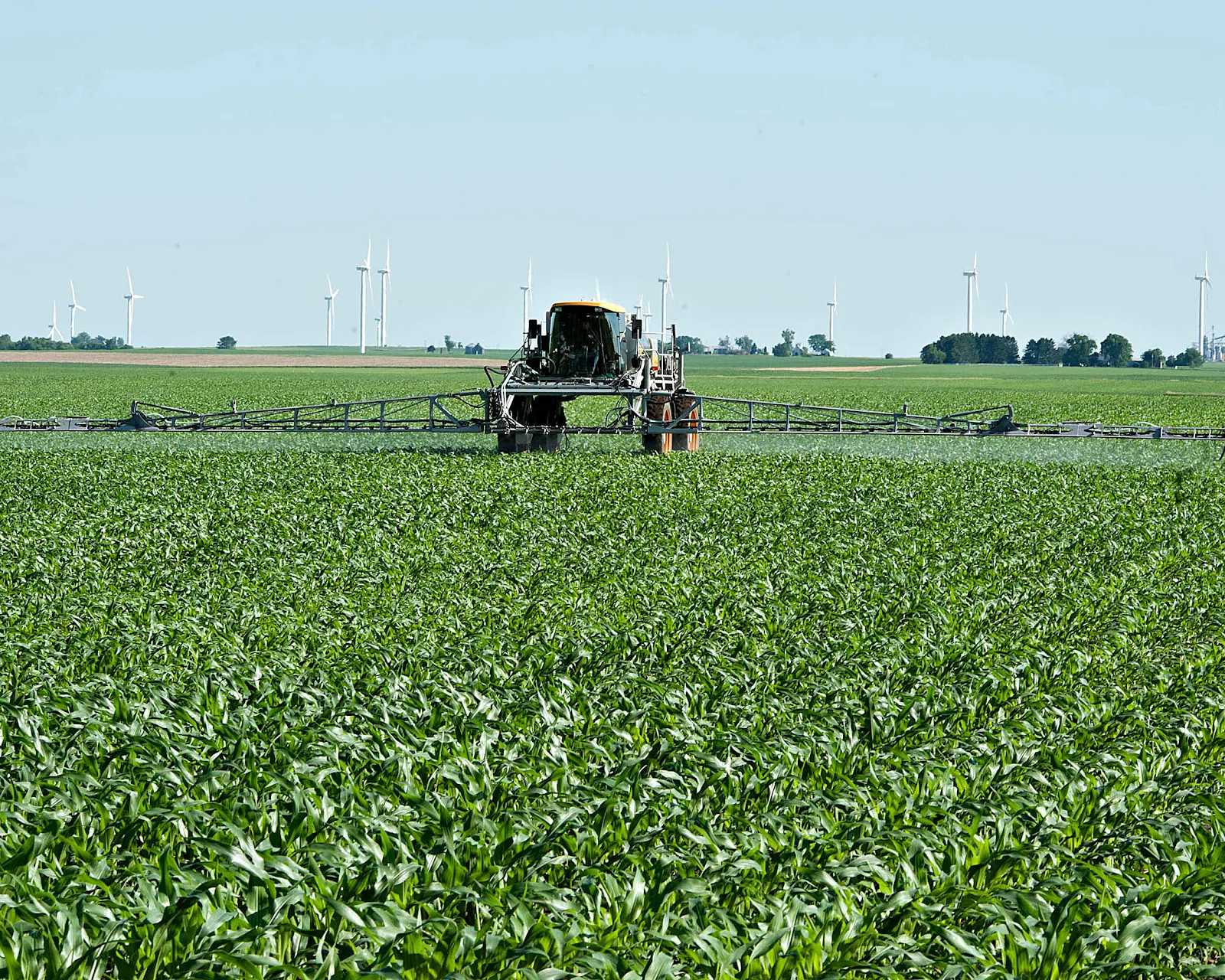
The closure of the Strait of Hormuz, a key fertilizer production and transportation route, has exacerbated the plight of US farmers, who are already grappling with dramatically increased fertilizer prices over the past five or six years. As reported by The Guardian, the situation has become even more dire in recent weeks, with prices for agricultural nutrients jumping due to the US-Israel war against Iran.
Rodney Bushmeyer, a 69-year-old farmer from Illinois, has seen the impact of rising fertilizer costs firsthand. His family-run farm, which has been in operation for over 100 years, is struggling to stay afloat as commodity prices for grain have dwindled. According to Bushmeyer, the current situation is "not sustainable in the long term."
The Middle East is a critical region for global fertilizer trade, with 35% of global urea trade and 20% of phosphate trade coming from the region. Chris Yearsley, CEO and head of nitrogen at Profercy, notes that the US imports about 25% of its total fertilizer use, including 18% of its nitrogen use, according to the American Farm Bureau.
Fertilizer Price Spike
Fertilizer prices have been elevated since the onset of the Russia-Ukraine war, and nitrogen values were already rising in late 2025. However, prices have nearly doubled since the shipping channel closed, with benchmark New Orleans nitrogen prices rising from $350 a short ton in late December to $600 as of 10 March, according to Yearsley.
The USDA had forecast 2026 to be another year of lowered profits for farmers, even before the spike in fertilizer prices. Philip Coffin, an independent grain industry analyst, notes that "with crop economics as bad as they are right now, it doesn't take much to destroy (a farmer's) income statement."
Farmer Perspectives
Lance Lillibridge, a farmer from east-central Iowa, has already purchased fertilizer for the upcoming season but notes that continued price levels will prove unsustainable in the future. "We won't be able to buy the fertilizer," he said, adding that lenders won't want to help farmers with credit.
Angela Guentzel, a sixth-generation farmer from Minnesota, purchased fertilizer this fall, before the recent price spike. She notes that modern farming technology has helped her farm be more precise and efficient with fertilizer application. However, if fertilizer prices remain high in the fall, it will only heighten the economic strain on farmers.
Food Security and National Security
Guentzel emphasizes that food security is essentially national security, and the crisis facing farmers poses problems that extend far beyond those who work the land. "Everything on the table starts with a farmer and seed in the ground. And fertilizer isn't really an optional thing," she said.
It's unclear whether there is any relief in sight for farmers grappling with high fertilizer prices. If fertilizer prices continue to increase, there could even be political implications. Brittany Martinez, a Republican strategist, notes that "farmers are the backbone of America, and when they're squeezed by rising costs like fertilizer, it carries real political weight."
Looking Ahead
For now, farmers are doing their best to contend with the blistering economic headwinds brought by fertilizer prices and brutal commodities markets. Bushmeyer remains hopeful, noting that "my dad used to say, we're at the mercy of the weather and the government, and we can't control either. When you grow up in this business, you just take whatever comes and you raise the best crop you can and rest is up to God and mother nature."
