

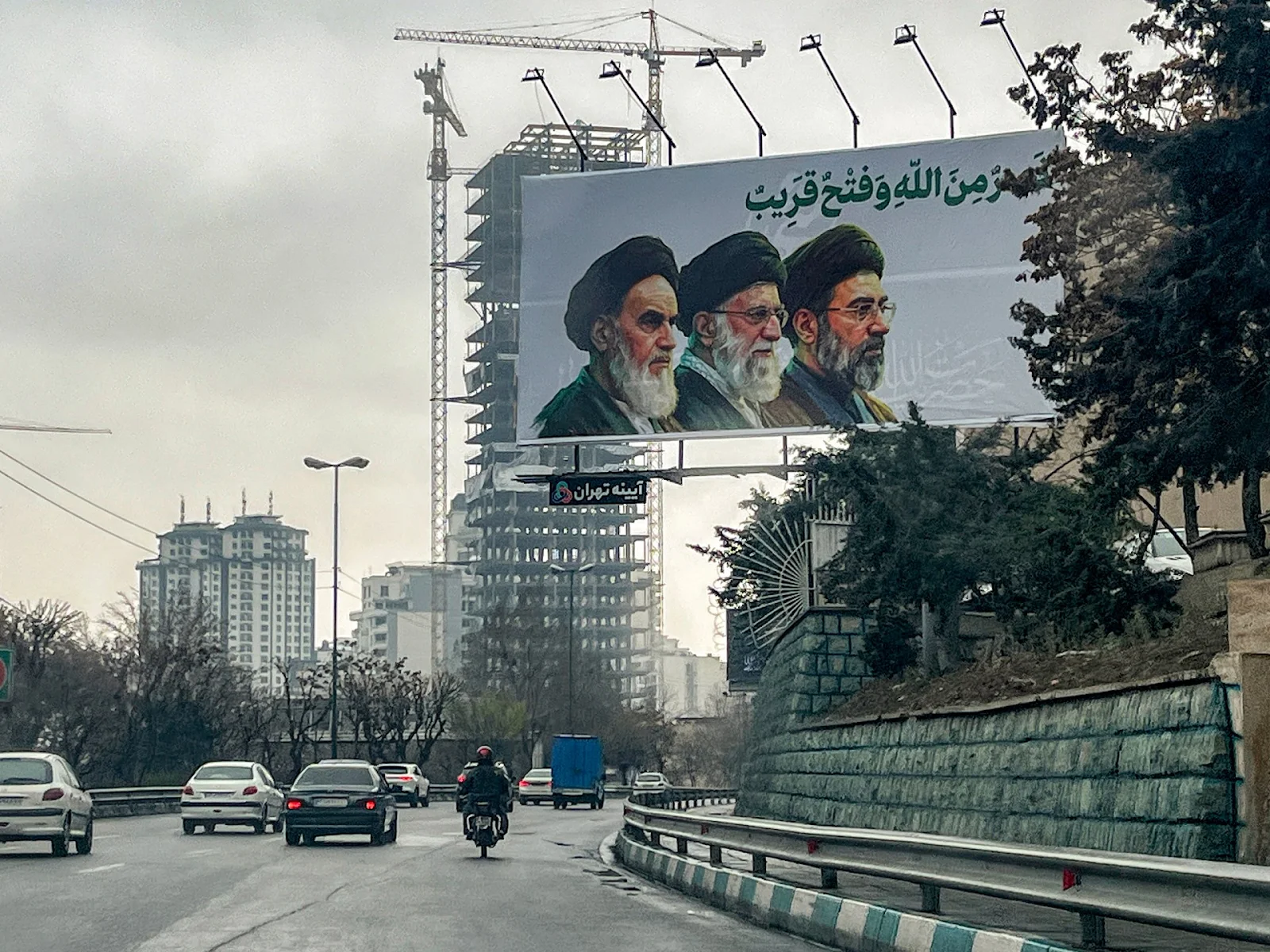
Iran is on the cusp of a significant transformation, its third major change in the past century, as the Islamic republic faces unprecedented strain. The country has undergone two defining moments in the past, each reflecting distinct civilisational identities that shaped its internal character and relationship with the world.
The first Iranian moment began in 1925 with the reign of the Pahlavi monarchy, led by Reza Khan Pahlavi, and ended in 1979 with the Iranian Revolution. During this period, Iran was secular, modernising, and closely tied to the Western-led camp during the Cold War. The shah, Mohammad Reza Shah Pahlavi, projected power across the region and served as a model of state-driven development.
The Pahlavi monarchy's legitimacy was anchored in the Persian imperial past, with the shah consciously linking his rule to the ancient Achaemenid Empire. However, beneath the surface of modernisation and imperial grandeur, the monarch was authoritarian, and the feared secret police, SAVAK, was synonymous with torture and repression.
Islamic Republic Era
The Islamic Republic of Iran, founded under Ayatollah Ruhollah Khomeini's doctrine of velayat-e faqih, emerged from the ashes of the shah's rule. The new republic was built on the premise that Islamic principles should govern all aspects of life, and its foreign policy became defined by resistance to the United States and Israel.
The regime's economic governance looked eastwards, aspiring to a model similar to China's, with authoritarian politics and state-directed economics. However, this independence came at a significant cost, with over 3,600 sanctions imposed on the republic, devastating the lives of ordinary Iranians.
Today, the Islamic republic is neither confident nor stable, with mass protests raising social, economic, and political questions about the nature of the social contract. Its regional influence is declining, its nuclear programme has brought about direct military confrontation, and its economy is struggling to deliver prosperity.
Uncertain Future
There are several scenarios for what happens next in Iran, including the regime surviving in its current form or a reformed Islamic republic emerging. However, a more turbulent scenario, with fragmentation, civil conflict, and a power vacuum, cannot be ruled out.
The next chapter in Iran's history will be shaped by the collision of internal and external forces, including the clerical establishment, the protest movement, and foreign powers. The outcome remains uncertain, and the consequences will be felt not only by Iranians but also by the region and the world.
Source: Al Jazeera
