

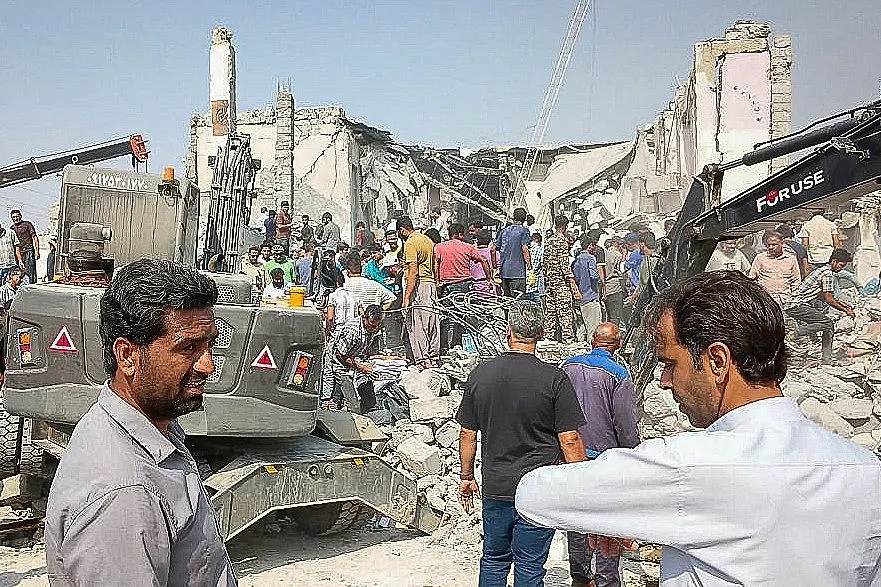
For Mahdi, a 10-year-old student at the elementary school in Minab, Iran, the start of the school week was like any other. But as the U.S.-Israeli airstrikes began, chaos erupted, and the once-peaceful morning was shattered. His sister, Farnaz, was among the at least 108 children who lost their lives in the strike, according to Shiva Amelirad, a representative of the Coordinating Council of Iranian Teachers' Trade Associations.
On February 28, 2026, a strike on a girls' elementary school in Minab, Iran, left a trail of devastation in its wake. The attack, part of a broader U.S.-Israeli assault on Iran, has raised alarm among educators and governments worldwide.
Attack on Iran's Education System
The strike on the school, which has been confirmed by multiple sources, including the U.S. Department of Defense and Iranian authorities, has sparked widespread condemnation. The U.N. education agency, UNESCO, has expressed deep alarm over the impact of strikes on educational institutions.
"Initial reports indicate that an attack on a girls' primary school in Minab, southern Iran, has resulted in the deaths of over 100 individuals, including numerous students," UNESCO stated. "The killing of pupils in a place dedicated to learning constitutes a grave violation of the protection afforded to schools under international humanitarian law."
The Human Toll
Shiva Amelirad, a Canada-based representative of the Coordinating Council of Iranian Teachers' Trade Associations, has spoken out about the devastating impact of the strike on the community. "Due to the limited capacity of the hospital morgue, refrigerated vehicles have reportedly been used to store the bodies of the victims," she said.
According to Amelirad, multiple children from the same family were killed in the explosion, and some teachers were killed in the attack. The trauma of this event will be felt for generations to come.
Context and Implications
The strike on the school has raised important questions about the protection of civilians in conflict zones. The U.S. Department of Defense has acknowledged reports of civilian harm and has pledged to take all precautions available to minimize the risk of unintended harm.
As the world grapples with the consequences of this attack, it is essential to remember the human cost of conflict. Mahdi's story, along with that of the countless families affected by this tragedy, serves as a poignant reminder of the need for restraint and caution in times of war.
The U.S.-Israeli assault on Iran has sparked a broader debate about the role of the military in global politics. As the situation continues to unfold, it is crucial to consider the long-term implications of this action and the potential consequences for the people of Iran and beyond.
International Response
The international community has been quick to condemn the strike on the school. Nobel prize winner and humanitarian Malala Yousafzai has spoken out against the killing of civilians, particularly children, in conflict zones.
"They were girls who went to school to learn, with hopes and dreams for their future. Today, their lives were brutally cut short," Malala wrote on social media. "The killing of civilians, especially children, is unconscionable, and I condemn it unequivocally."
As the world mourns the loss of these young lives, it is essential to remember the importance of protecting civilians in conflict zones.
What's Next
The aftermath of the strike on the school will be felt for months, if not years, to come. As the situation in Iran continues to unfold, it is crucial to prioritize the protection of civilians and the education of children.
The international community must come together to condemn the killing of civilians and to support the recovery efforts in Iran. By working together, we can ensure that the memory of these young lives is not lost and that justice is served.
The strike on the school has served as a stark reminder of the devastating consequences of conflict. As we move forward, it is essential to prioritize peace, restraint, and caution in times of war.
