

**The Endgame in Sight? Trump's Mixed Messages on Iran**
As the world watches the escalating conflict between the United States and Iran, President Donald Trump's assertions that the war may soon come to an end have left many wondering: What is the goal, and when will it be achieved?
"I think the war is very complete, pretty much," Trump said in a phone interview with CBS News on Monday, suggesting that Iran's military capabilities have been severely crippled after a wave of strikes by the US and Israel.
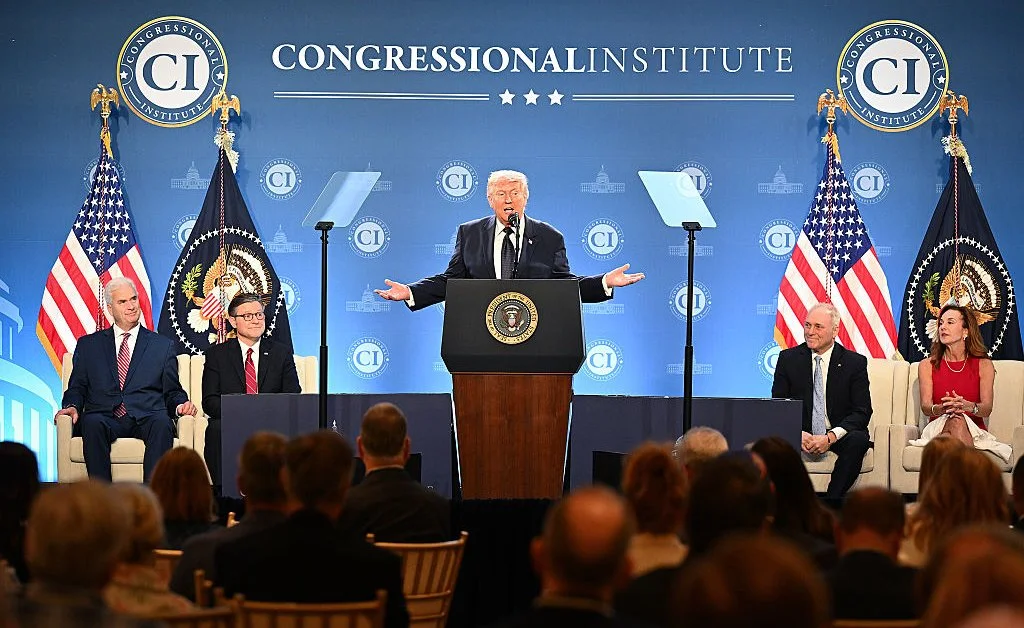
But hours later, speaking to Republican lawmakers at a House policy retreat in Florida, Trump struck a very different tone, describing the war as unfinished and pledging continued military pressure. "We've already won in many ways, but we haven't won enough," he said, vowing to achieve "ultimate victory" in the region.
The mixed signals from the President underscore the uncertain trajectory of a conflict that has expanded rapidly across the Middle East and raised fears in Washington that it could deepen into a longer and deadlier war.
The war with Iran has already produced a widening humanitarian and economic toll across the region. The Iranian Red Crescent Society has said roughly 1,300 people have been killed in strikes inside the country, while Iranian attacks across the Middle East have killed more than 30 people. Israeli strikes have also expanded into Lebanon, killing nearly 500 people, according to Lebanese officials, and displacing hundreds of thousands of civilians.
As the US continues to maintain a significant military presence in the region, many experts are questioning the Administration's strategy and the expected duration of the conflict. The Pentagon has posted a message on social media declaring, "We have only just begun to fight," while Secretary of State Marco Rubio has suggested that the US moved in part because Israel was preparing its own attack and might have triggered retaliation against American forces.
Read more: Trump’s War: What's Driving the Conflict in the Middle East?
Trump's insistence that the war could soon be finished also stands in contrast with signals from the Defense Department. At a press conference following his remarks to Republican lawmakers, Trump again portrayed the war in Iran as nearly at its end, saying, "We're achieving major strides toward completing our military objective, and some people could say they're pretty well complete."
But what does this mean for the people caught in the crossfire?
"We're going to have a much safer world as soon as it's finished," Trump said Monday, predicting that the campaign would end quickly. "It's going to be finished pretty quickly."
As the world waits for clarity on the President's intentions and the expected duration of the conflict, one thing is clear: the humanitarian and economic costs of the war will only continue to mount unless a resolution is reached soon.
**A Growing Humanitarian Toll**
The conflict has already displaced hundreds of thousands of civilians in Lebanon and raised concerns about the country's ability to cope with the influx of refugees. The Iranian Red Crescent Society has also reported that roughly 1,300 people have been killed in strikes inside the country.
"We're going to have a much safer world as soon as it's finished," Trump said Monday, predicting that the campaign would end quickly. "It's going to be finished pretty quickly."
But for those affected, the consequences of the war will be felt for years to come.
**Inside the Community**
As the conflict rages on, many in the international community are calling for a peaceful resolution to the conflict. The United Nations has been working closely with regional actors to broker a ceasefire and reduce tensions in the region.
"We're urging all parties to exercise restraint and to refrain from any actions that could lead to further escalation," said a spokesperson for the United Nations.
But as the US continues to maintain a significant military presence in the region, many experts are questioning the Administration's strategy and the expected duration of the conflict.
**What Comes Next?**
With the conflict showing no signs of abating, the international community remains on high alert. As the US continues to maintain a significant military presence in the region, many experts are questioning the Administration's strategy and the expected duration of the conflict.
One thing is clear: the humanitarian and economic costs of the war will only continue to mount unless a resolution is reached soon.
**The Policy Debate**
As the US continues to maintain a significant military presence in the region, the debate over the effectiveness of the Administration's strategy continues to grow. Many experts are questioning the Administration's goals and the expected duration of the conflict.
"We need to be clear about our objectives and the costs of the war," said a spokesperson for the Council on Foreign Relations. "The international community is watching, and the world is waiting for a resolution."
**A Changing Landscape**
As the conflict continues to rage on, the landscape of the Middle East is changing rapidly. The US is repositioning its military presence in the region, while Iran is mobilizing its own forces for a potential fightback.
One thing is clear: the humanitarian and economic costs of the war will only continue to mount unless a resolution is reached soon.
The article will be concluded with a final analysis and a summary of the main points.
**What's Driving the Conflict in the Middle East?**
The conflict between the US and Iran has roots in several decades of mistrust and tension. The two countries have had a long and complicated relationship, marked by periods of cooperation and periods of hostility.
Recent tensions have escalated in recent weeks, with the killing of Qasem Soleimani, the commander of Iran's Revolutionary Guard, in a US drone strike. Iran retaliated by launching a wave of missile attacks against US military bases in Iraq.
The conflict has now spread to other parts of the region, with Israeli strikes expanding into Lebanon and killing nearly 500 people. The humanitarian and economic toll of the war will only continue to mount unless a resolution is reached soon.
**Sources**
- TIME: Trump's War: What's Driving the Conflict in the Middle East?
- CBS News: Trump on Iran: "The war is very complete, pretty much"
- The Iranian Red Crescent Society
- The Pentagon
- The Council on Foreign Relations
- The United Nations
The run ID for this article is 2026-03-17T08:00:00.000-04:00
